


Bauhaus forever.
Dubbed in : German ( Original ) , English
At Berlin's displaced Bauhaus-Archiv, the construction site becomes the form of a cinematic essay—an experiment in fragments, voices, bodies and sound—asking what becomes of a radical idea once preser…
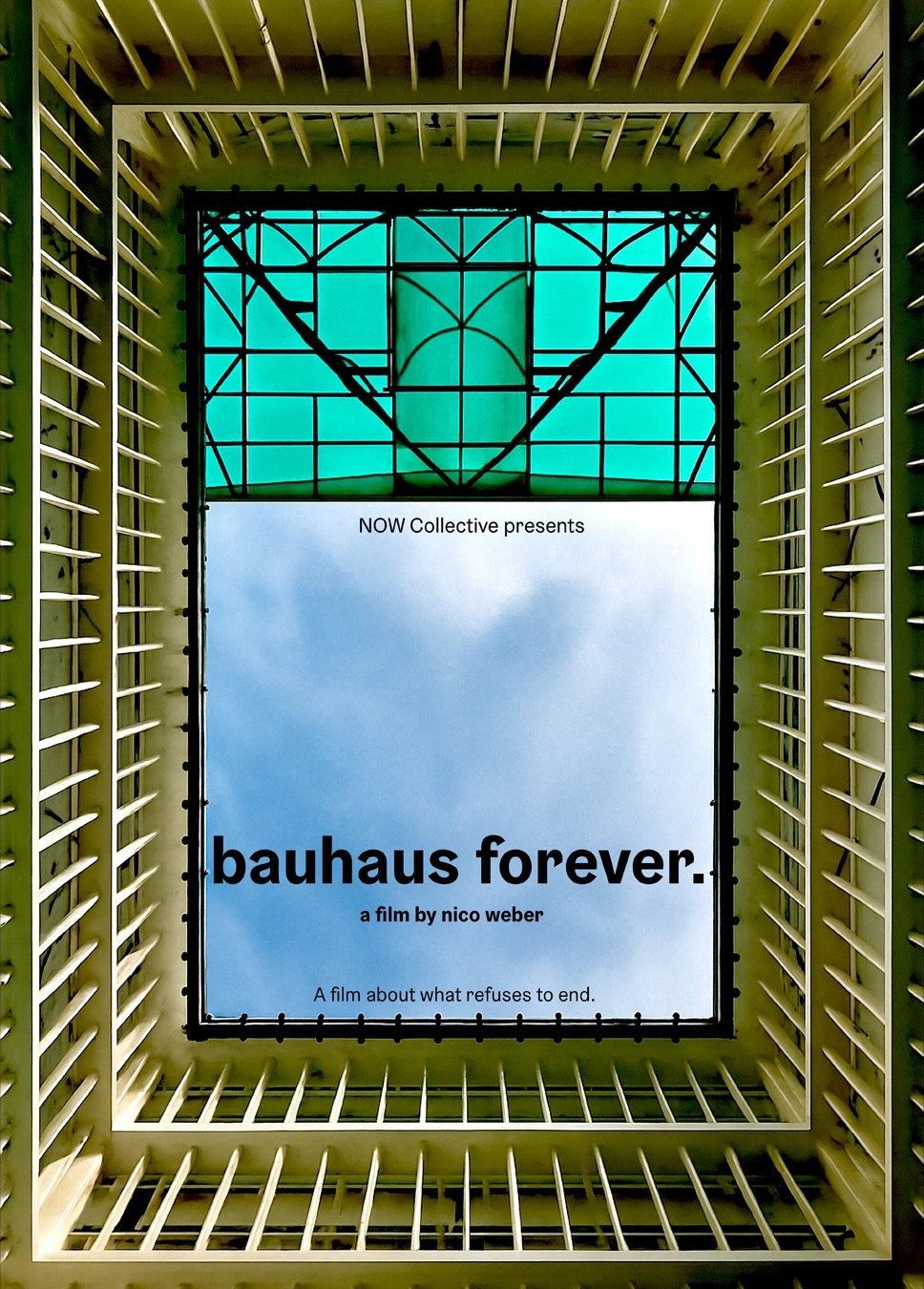
Bauhaus forever.
Dubbed in : German ( Original ) , English
At Berlin's displaced Bauhaus-Archiv, the construction site becomes the form of a cinematic essay—an experiment in fragments, voices, bodies and sound—asking what becomes of a radical idea once preserved and set in motion again. Inside an unfinished building, the world is seen from a place that does not yet exist. Concrete ends in open air. Water gathers below ground. Machines move, stop, wait. Beyond the fences, Berlin continues as if the ground beneath it were certain. The Bauhaus-Archiv has left its house. Its collection and its people have moved into temporary rooms. The future museum is still only concrete, scaffolding, dust and time. For five years, the camera returns. But the film does not proceed in a straight line. It turns. Across seven chapters, spaces, bodies, archives, machines, voices, music and wind recur in shifting constellations. The Bauhaus was born from the ruins of one world. A century later, the ground is shifting again. An experiment becomes an institution. What was meant to remain in motion is preserved, framed, attacked — yet refuses to stand still. With each turn, another relation becomes visible. What appeared historical begins to look present. What appeared stable begins to move. Elsewhere, a creature moved only by the wind begins to walk. bauhaus forever. does not force its fragments into a final account. It keeps them in motion. The construction site is more than its subject. It is its condition. The film is complete. Its questions are not. Bauhaus forever. is a cinematic essay filmed over five years. It begins with the Bauhaus-Archiv / Museum für Gestaltung in Berlin: its historic building closed, its collection dispersed, its staff working from temporary locations, while a new museum remains under construction. What was expected to be a temporary situation becomes the duration of the film. The film is carried by voices. Employees of the archive, people working on the construction site and others encountered along the way speak from within their work, their spaces and their everyday routines. Their voices do not form a conventional chain of interviews. They appear, disappear and return, sometimes attached to a face, sometimes to a room, an object, a machine or an empty construction site. From these voices, observations and fragments, the film moves beyond the institution itself. Historical photographs and films from the 1920s meet contemporary architecture, landscapes, bodies, work processes and sounds. In the Netherlands, Theo Jansen and his wind-driven Strandbeests open another field of experimentation: structures that move, fail, adapt and begin again. The Bauhaus is not retold as a chronological history, and the unfinished Bauhaus-Archiv is not the film's destination. Both become material within a larger movement through the present. Images, voices, archival fragments and sounds are placed next to one another rather than made to explain each other. Connections emerge through repetition, contrast and association. As the years pass, the construction site changes, deadlines shift, political and economic conditions change, and the promised opening recedes further into the future. The film continues to return to the same place, but never to exactly the same situation. By the end of filming, the new museum has still not opened. The archive remains in temporary locations and the building remains unfinished. What began as the observation of a construction project has become a film about what happens to ideas when reality refuses to follow the plan.
Bauhaus forever.
Documentary
Film Details
At Berlin's displaced Bauhaus-Archiv, the construction site becomes the form of a cinematic essay—an experiment in fragments, voices, bodies and sound—asking what becomes of a radical idea once preserved and set in motion again. Inside an unfinished building, the world is seen from a place that does not yet exist. Concrete ends in open air.
Water gathers below ground. Machines move, stop, wait. Beyond the fences, Berlin continues as if the ground beneath it were certain.
The Bauhaus-Archiv has left its house. Its collection and its people have moved into temporary rooms. The future museum is still only concrete, scaffolding, dust and time.
For five years, the camera returns. But the film does not proceed in a straight line. It turns.
Across seven chapters, spaces, bodies, archives, machines, voices, music and wind recur in shifting constellations. The Bauhaus was born from the ruins of one world. A century later, the ground is shifting again.
An experiment becomes an institution. What was meant to remain in motion is preserved, framed, attacked — yet refuses to stand still. With each turn, another relation becomes visible.
What appeared historical begins to look present. What appeared stable begins to move. Elsewhere, a creature moved only by the wind begins to walk.
bauhaus forever. does not force its fragments into a final account. It keeps them in motion.
The construction site is more than its subject. It is its condition. The film is complete.
Its questions are not. Bauhaus forever. is a cinematic essay filmed over five years.
It begins with the Bauhaus-Archiv / Museum für Gestaltung in Berlin: its historic building closed, its collection dispersed, its staff working from temporary locations, while a new museum remains under construction. What was expected to be a temporary situation becomes the duration of the film. The film is carried by voices. Employees of the archive, people working on the construction site and others encountered along the way speak from within their work, their spaces and their everyday routines.
Their voices do not form a conventional chain of interviews. They appear, disappear and return, sometimes attached to a face, sometimes to a room, an object, a machine or an empty construction site. From these voices, observations and fragments, the film moves beyond the institution itself. Historical photographs and films from the 1920s meet contemporary architecture, landscapes, bodies, work processes and sounds.
In the Netherlands, Theo Jansen and his wind-driven Strandbeests open another field of experimentation: structures that move, fail, adapt and begin again. The Bauhaus is not retold as a chronological history, and the unfinished Bauhaus-Archiv is not the film's destination. Both become material within a larger movement through the present. Images, voices, archival fragments and sounds are placed next to one another rather than made to explain each other.
Connections emerge through repetition, contrast and association. As the years pass, the construction site changes, deadlines shift, political and economic conditions change, and the promised opening recedes further into the future. The film continues to return to the same place, but never to exactly the same situation. By the end of filming, the new museum has still not opened. The archive remains in temporary locations and the building remains unfinished.
What began as the observation of a construction project has become a film about what happens to ideas when reality refuses to follow the plan..