


Blue Roses
Blue Roses is an inspiring documentary about Bob Jamison, a recovering substance user, and other frontline community workers who provide care to people in Ottawa's inner-city rooming house community w…
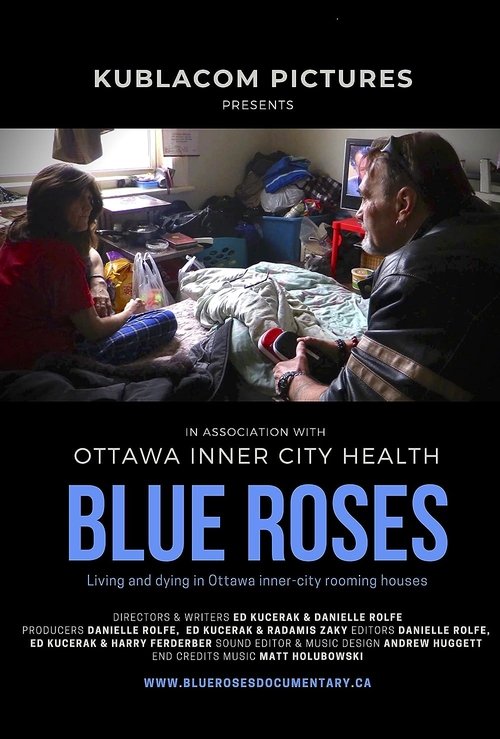
Blue Roses
Blue Roses is an inspiring documentary about Bob Jamison, a recovering substance user, and other frontline community workers who provide care to people in Ottawa's inner-city rooming house community who face issues of poverty, addiction and mental illness that often lead to premature death. In the process of providing this care, they challenge the conventional definition of palliative (end of life) care, which is typically provided in hospitals and hospices to people with terminal illness during their last year of life. Death and dying are daily realities in Bob's Somerset West neighbourhood that is densely populated with rooming houses that provide basic shelter to people living in poverty and often battling addiction and mental illness. Rooming house residents are often invisible to care providers and fall through the crack between stable housing and homeless shelters where palliative care can be provided. "In my neighbourhood I kind of wanted to re-define the definition of palliative care because watching people suffer along with no support , living in poverty, living in places that weren't conducive to healing what I saw were people dying for less things like little infections and a broken leg could caused someone to die in this neighbourhood", comments Bob in the film. Although rooming houses play an important and often overlooked role in providing affordable housing in communities, conditions are not ideal to provide palliative care. Houses seldom have phones, doorbells and are sometimes without running water. Residents also regularly deal with bed bugs, cockroaches, mice, rats, safety and health issues, but fear eviction if they complain. For Bob, offering support and dignity for people dying in his neighbourhood is critical to his own recovery from addiction as he chooses to face rather than ignore the daily suffering that he is witness to. As a community leader, harm reduction worker, activist, listener, and peacekeeper, we witness Bob bring food to rooming house tenants battling cancer, move tenants away from drug houses and arrange memorials for those that have passed in his community. "For me the only way that I was going to be successful at my own recovery was to do something, was to get involved right. Not just ignore everything that was going on in the neighbourhood", says Bob as he drops off provisions to a rooming house resident. The film also introduces us to outreach nurses Joanna and Kathy, who provide healthcare to rooming house tenants as well community workers Matt and Irene who, with support from Bob, start support groups for their community. Blue Roses shares Bob's painful past and describes how his experiences have led him to better understand how we all are connected, despite our apparent differences. As Bob throws himself into a job that draws upon his lived experience of poverty, addiction and mental illness to support his peers, we witness the toll that the immense needs of his community take on him Blue Roses provides a fascinating and poignant look at life in rooming houses and the difficulties in providing palliative care to this invisible community. It captures the compelling, and often heart breaking, challenges that Bob and others with lived experience face in bringing kindness and a voice to their community.
Blue Roses
Documentary
Film Details
Blue Roses is an inspiring documentary about Bob Jamison, a recovering substance user, and other frontline community workers who provide care to people in Ottawa's inner-city rooming house community who face issues of poverty, addiction and mental illness that often lead to premature death. In the process of providing this care, they challenge the conventional definition of palliative (end of life) care, which is typically provided in hospitals and hospices to people with terminal illness during their last year of life. Death and dying are daily realities in Bob's Somerset West neighbourhood that is densely populated with rooming houses that provide basic shelter to people living in poverty and often battling addiction and mental illness.
Rooming house residents are often invisible to care providers and fall through the crack between stable housing and homeless shelters where palliative care can be provided. "In my neighbourhood I kind of wanted to re-define the definition of palliative care because watching people suffer along with no support , living in poverty, living in places that weren't conducive to healing what I saw were people dying for less things like little infections and a broken leg could caused someone to die in this neighbourhood", comments Bob in the film. Although rooming houses play an important and often overlooked role in providing affordable housing in communities, conditions are not ideal to provide palliative care.
Houses seldom have phones, doorbells and are sometimes without running water. Residents also regularly deal with bed bugs, cockroaches, mice, rats, safety and health issues, but fear eviction if they complain. For Bob, offering support and dignity for people dying in his neighbourhood is critical to his own recovery from addiction as he chooses to face rather than ignore the daily suffering that he is witness to.
As a community leader, harm reduction worker, activist, listener, and peacekeeper, we witness Bob bring food to rooming house tenants battling cancer, move tenants away from drug houses and arrange memorials for those that have passed in his community. "For me the only way that I was going to be successful at my own recovery was to do something, was to get involved right. Not just ignore everything that was going on in the neighbourhood", says Bob as he drops off provisions to a rooming house resident.
The film also introduces us to outreach nurses Joanna and Kathy, who provide healthcare to rooming house tenants as well community workers Matt and Irene who, with support from Bob, start support groups for their community. Blue Roses shares Bob's painful past and describes how his experiences have led him to better understand how we all are connected, despite our apparent differences. As Bob throws himself into a job that draws upon his lived experience of poverty, addiction and mental illness to support his peers, we witness the toll that the immense needs of his community take on him Blue Roses provides a fascinating and poignant look at life in rooming houses and the difficulties in providing palliative care to this invisible community.
It captures the compelling, and often heart breaking, challenges that Bob and others with lived experience face in bringing kindness and a voice to their community..