


Ch'ul Be, Sacred Path
"Ch'ul be'' delves into the Tsotsil sacred path, exploring ancient collective commitments that sustain the cycle of life in community. Mayan culture still thrives among the Tzotzil people of San André…
Ch'ul Be, Sacred Path
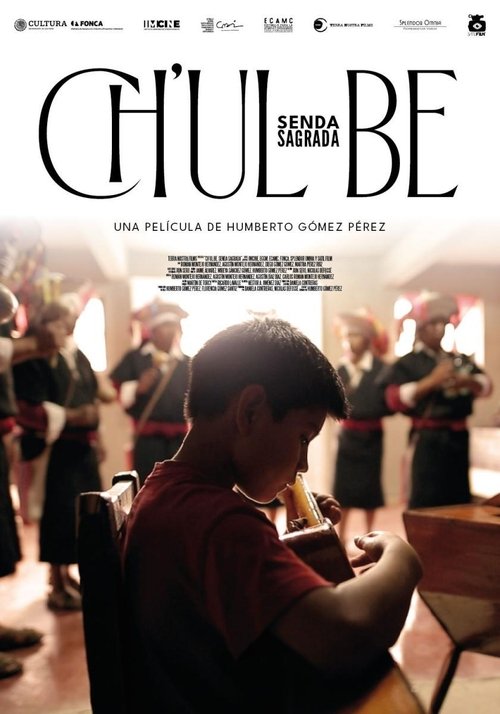
"Ch'ul be'' delves into the Tsotsil sacred path, exploring ancient collective commitments that sustain the cycle of life in community. Mayan culture still thrives among the Tzotzil people of San Andrés Larrainzar, a town in southeastern Mexico. Each inhabitant shares responsibility for the collective well-being but only a few are called upon to serve the gods - often in a dream. Preparations for the annual festival in honor of the town's patron saint Andrew the Apostle are in full swing. The film focuses on Martha and Diego, a married couple who have been appointed guardians of the saint, and on Román and his son Tino, who have been called upon to serve as musicians. Music has a key role to play in this blend of Catholic and Mayan faith. Meticulously and with love, filmmaker Humberto Gómez Pérez - son of Martha and Diego - captures the dedication with which these servants of faith execute their allotted tasks. Elsewhere in the film, the director treats the viewer to stunning views of the sweeping mountain landscape and close-ups of the crafted objects and musical instruments that have a central role in this religious practice. He transports us from the everyday to the divine, and from the personal to the collective, to witness still-thriving ancient approaches to transferring knowledge. ''Ch'ul be'' delves into the Tsotsil sacred path, exploring ancient collective commitments that sustain the cycle of life in community. In San Andres Larrainzar, everyone is responsible for the collective well-being, but few are chosen to follow the path of serving the gods. ''Ch'ul be'' is the path of Martha and Diego, and of Román and his son Tino. It is a journey from the everyday to the divine, from the individual to the collective, to ensure that knowledge is not lost and the cycle is not broken. —Terra Nostra Films
Ch'ul Be, Sacred Path
Documentary
Film Details
"Ch'ul be'' delves into the Tsotsil sacred path, exploring ancient collective commitments that sustain the cycle of life in community. Mayan culture still thrives among the Tzotzil people of San Andrés Larrainzar, a town in southeastern Mexico. Each inhabitant shares responsibility for the collective well-being but only a few are called upon to serve the gods - often in a dream.
Preparations for the annual festival in honor of the town's patron saint Andrew the Apostle are in full swing. The film focuses on Martha and Diego, a married couple who have been appointed guardians of the saint, and on Román and his son Tino, who have been called upon to serve as musicians. Music has a key role to play in this blend of Catholic and Mayan faith.
Meticulously and with love, filmmaker Humberto Gómez Pérez - son of Martha and Diego - captures the dedication with which these servants of faith execute their allotted tasks. Elsewhere in the film, the director treats the viewer to stunning views of the sweeping mountain landscape and close-ups of the crafted objects and musical instruments that have a central role in this religious practice. He transports us from the everyday to the divine, and from the personal to the collective, to witness still-thriving ancient approaches to transferring knowledge.
''Ch'ul be'' delves into the Tsotsil sacred path, exploring ancient collective commitments that sustain the cycle of life in community. In San Andres Larrainzar, everyone is responsible for the collective well-being, but few are chosen to follow the path of serving the gods. ''Ch'ul be'' is the path of Martha and Diego, and of Román and his son Tino.
It is a journey from the everyday to the divine, from the individual to the collective, to ensure that knowledge is not lost and the cycle is not broken. —Terra Nostra Films.