


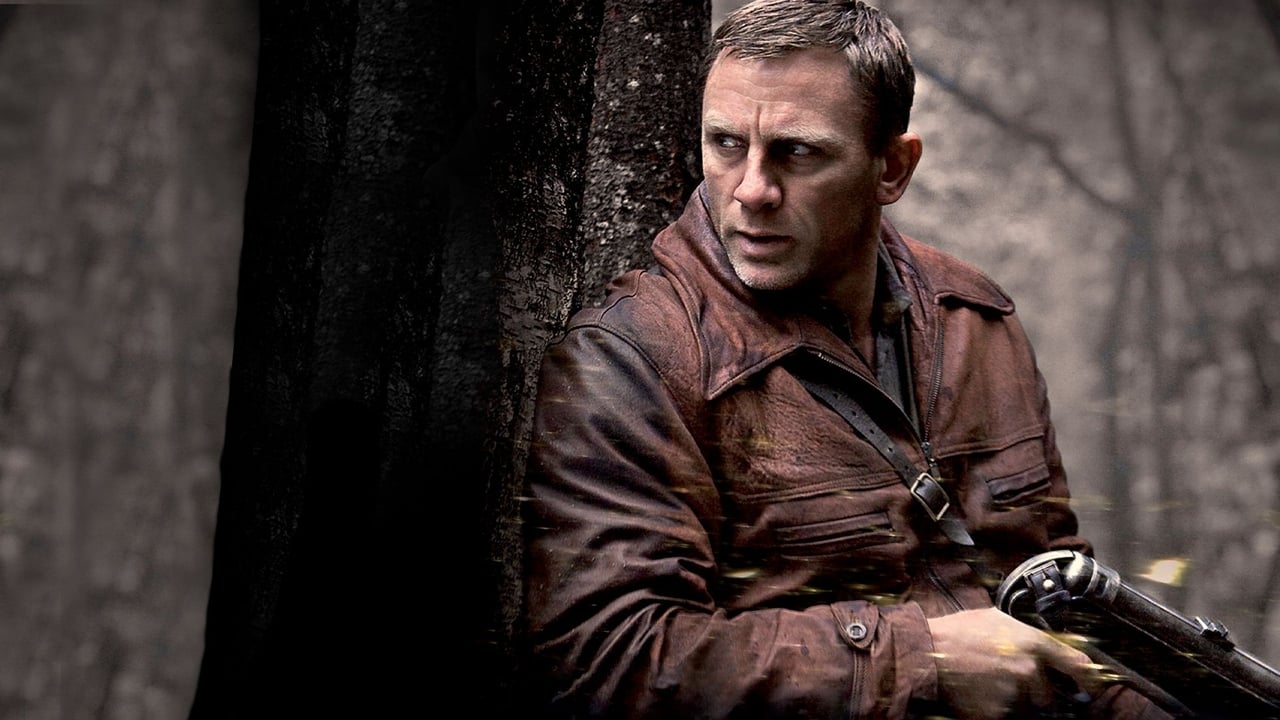
Defiance
Jewish brothers in German-occupied Eastern Europe escape into a Belorussian forest, where they join Russian resistance fighters, and endeavor to build a village, in order to protect themselves and abo…
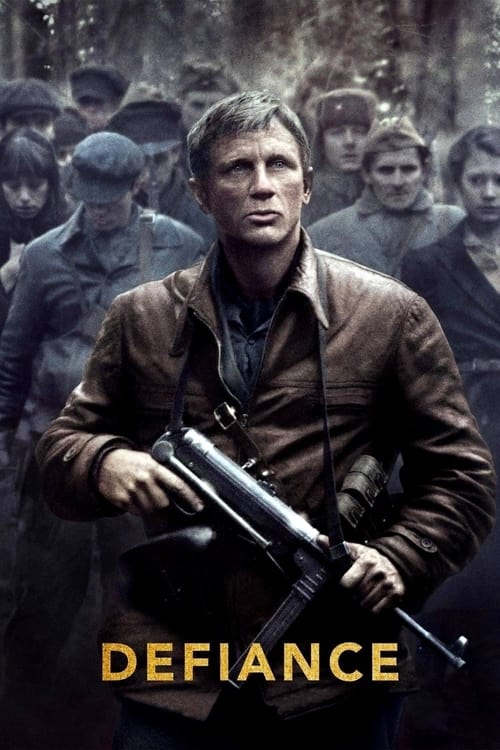
Defiance
Jewish brothers in German-occupied Eastern Europe escape into a Belorussian forest, where they join Russian resistance fighters, and endeavor to build a village, in order to protect themselves and about one thousand Jewish non-combatants. On the run and hiding in the deep forests of German-occupied Poland and Belorussia (World War II), the four Bielski brothers assist a large community of Jewish refugees and then face the almost impossible task of foraging for food and weapons required for survival over the winter. Led by Tuvia Bielski, the community hides in fear of discovery, contending with neighboring Soviet partisans and unsure whom to trust. People of all ages work to survive, building makeshift homes in the dark, cold and unforgiving forests. They develop relationships, struggle with fear and uncertainty, and manage internal dissent. As Zus Bielski joins the Soviet Partisans, the brothers become part of a larger effort to defeat the Nazis. —Cinema_Fan In 1941, in Belorussia, the Jewish Bielski brothers succeed in escaping from the massacre of the German in their village where their parents were killed. They hide in the woods and sooner other runaway Jews join them. Tuvia Bielski, the eldest brother, assumes the leadership of the survivors and plans a camp with tasks for everyone in the community; however, his brother Zus Bielski wants to fight against the Germans and does not agree with Tuvia's directions. Zus decides to join the Russian resistance that believes that Jews do not fight. While Tuvia welcomes any survivor in his camp with his two younger brothers and fight for food and ammunition, Zus finds anti-Semitism among the Russian partisans. —Claudio Carvalho, Rio de Janeiro, Brazil After the German invasion of Poland in September 1939, the Bielski brothers escape the slaughter and hide in the woods. Soon they are joined by many others, all running from the savagery being inflicted on the Jews. The eldest of the Bielski brother, Tuvia and Zus, disagree over what to do with the growing forest population. Tuvia believes that they must welcome anyone who wants to join them while Zus thinks they should be fighting the Germans. After a falling out, Zus joins the local Russian partisans - with whom the Bielskis had already completed an informal truce - and Tuvia stays with their forest community. —garykmcd
Defiance
Action,Drama,History
Film Details
Jewish brothers in German-occupied Eastern Europe escape into a Belorussian forest, where they join Russian resistance fighters, and endeavor to build a village, in order to protect themselves and about one thousand Jewish non-combatants. On the run and hiding in the deep forests of German-occupied Poland and Belorussia (World War II), the four Bielski brothers assist a large community of Jewish refugees and then face the almost impossible task of foraging for food and weapons required for survival over the winter. Led by Tuvia Bielski, the community hides in fear of discovery, contending with neighboring Soviet partisans and unsure whom to trust.
People of all ages work to survive, building makeshift homes in the dark, cold and unforgiving forests. They develop relationships, struggle with fear and uncertainty, and manage internal dissent. As Zus Bielski joins the Soviet Partisans, the brothers become part of a larger effort to defeat the Nazis.
—Cinema_Fan In 1941, in Belorussia, the Jewish Bielski brothers succeed in escaping from the massacre of the German in their village where their parents were killed. They hide in the woods and sooner other runaway Jews join them. Tuvia Bielski, the eldest brother, assumes the leadership of the survivors and plans a camp with tasks for everyone in the community; however, his brother Zus Bielski wants to fight against the Germans and does not agree with Tuvia's directions.
Zus decides to join the Russian resistance that believes that Jews do not fight. While Tuvia welcomes any survivor in his camp with his two younger brothers and fight for food and ammunition, Zus finds anti-Semitism among the Russian partisans. —Claudio Carvalho, Rio de Janeiro, Brazil After the German invasion of Poland in September 1939, the Bielski brothers escape the slaughter and hide in the woods.
Soon they are joined by many others, all running from the savagery being inflicted on the Jews. The eldest of the Bielski brother, Tuvia and Zus, disagree over what to do with the growing forest population. Tuvia believes that they must welcome anyone who wants to join them while Zus thinks they should be fighting the Germans.
After a falling out, Zus joins the local Russian partisans - with whom the Bielskis had already completed an informal truce - and Tuvia stays with their forest community. —garykmcd.