


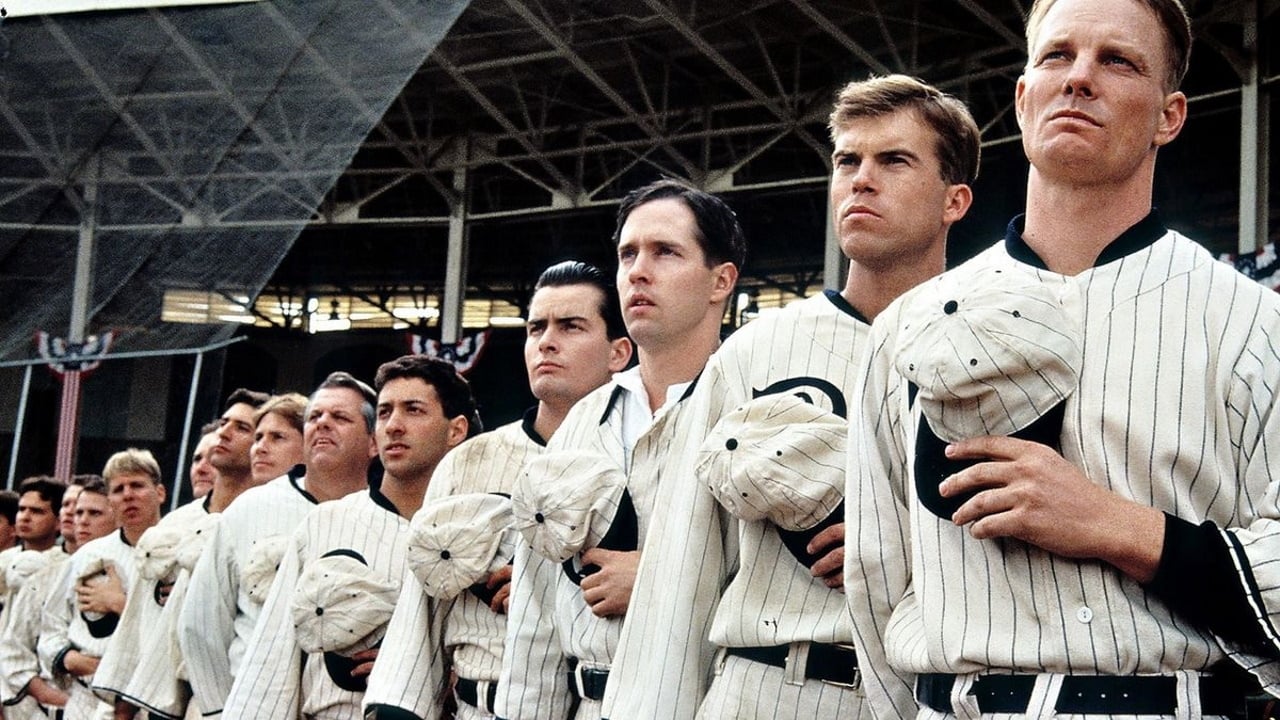
Eight Men Out
A dramatization of the Black Sox scandal when the underpaid Chicago White Sox accepted bribes to deliberately lose the 1919 World Series. A semi-fictionalized account of the scandal surrounding the 19…
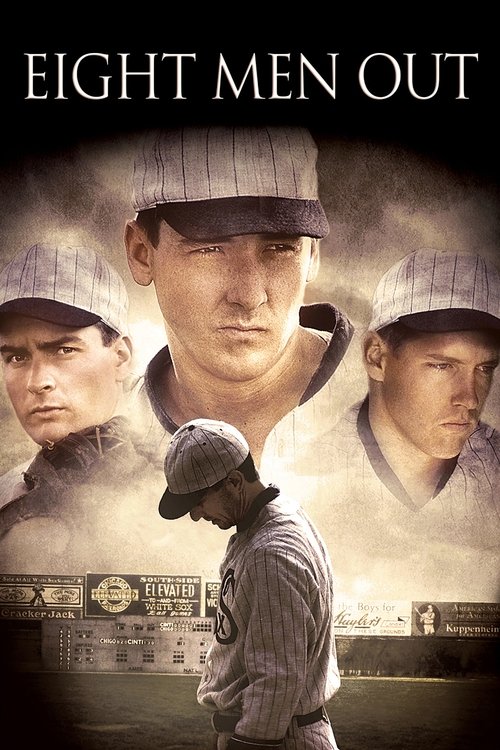
Eight Men Out
A dramatization of the Black Sox scandal when the underpaid Chicago White Sox accepted bribes to deliberately lose the 1919 World Series. A semi-fictionalized account of the scandal surrounding the 1919 World Series, coined the Black Sox Scandal, is presented. The Chicago White Sox, considered the cream of the crop and one of the best major league teams ever, has just won the American League pennant, and are odds on favorites to win the World Series against the Reds. While team owner Charles A. Comiskey publicly crows about the superiority of the team he has assembled especially in their cohesion, he is unaware that arguably the cohesion in the players' determination to win is matched only by their feeling of unappreciation by Comiskey, especially financially as he screws them over time and time again on promises made. Sensing an opportunity, professional gamblers begin to feel out who they believe may be sympathetic Chicago players to a game and/or series fixing scheme, especially lucrative seeing as the to the disparity between the two teams. There end up being eight players "in" to various degrees, from being the "all in" negotiators between the gamblers and the players, to those somewhat unaware of what is happening, to those just in the know but remain silent. Things quickly go off the rails as each individual and group is looking out solely for his own interest, from the disparate groups of players, to the gamblers, to the scheme financiers, to the team owners - Comiskey and others - as closely watching sports journalists can see that some of the Sox players are not playing as hard or as well as they can. —Huggo The great Chicago White Sox team of 1919 is the saddest team to ever win a pennant. The team is bitter at their penny pincher owner, Charles Comiskey, and at their own teammates. Gamblers take advantage of this opportunity to offer some players money to throw the series. (Most of the players didn't get as much as promised.) But Buck Weaver and the great Shoeless Joe Jackson turn back at the last minute and try to play their best. The Sox actually almost come back from a 3-1 deficit. Two years later, the truth breaks out and the Sox are sued on multiple counts. They are found innocent by the jury but baseball commissioner Landis has other plans. The eight players are suspended for life, and Buck Weaver, for the rest of his life, tries to clear his name. —Patrick Lynn <pjustinl@worldnet.att.net> John Sayles' recounting of the 1919 "Black Sox" incident, in which the Chicago team conspired with organized-gambling powers to throw the World Series. —Susan C. Mitchell <susanm@indirect.com> Eight Men Out tells the true story of the infamous 'Black Sox' scandal of 1919, in which the White Sox players deliberately lost the World Series. The movie places the scandal in the context of a labor dispute between the players and their then all-powerful team owner, and how mobster Arnold Rothstein took advantage of the dispute. The result was a human tragedy for players like "Shoeless" Joe Jackson. —Reid Gagle
Eight Men Out
Drama,History,Sport
Film Details
A dramatization of the Black Sox scandal when the underpaid Chicago White Sox accepted bribes to deliberately lose the 1919 World Series. A semi-fictionalized account of the scandal surrounding the 1919 World Series, coined the Black Sox Scandal, is presented. The Chicago White Sox, considered the cream of the crop and one of the best major league teams ever, has just won the American League pennant, and are odds on favorites to win the World Series against the Reds.
While team owner Charles A. Comiskey publicly crows about the superiority of the team he has assembled especially in their cohesion, he is unaware that arguably the cohesion in the players' determination to win is matched only by their feeling of unappreciation by Comiskey, especially financially as he screws them over time and time again on promises made. Sensing an opportunity, professional gamblers begin to feel out who they believe may be sympathetic Chicago players to a game and/or series fixing scheme, especially lucrative seeing as the to the disparity between the two teams.
There end up being eight players "in" to various degrees, from being the "all in" negotiators between the gamblers and the players, to those somewhat unaware of what is happening, to those just in the know but remain silent. Things quickly go off the rails as each individual and group is looking out solely for his own interest, from the disparate groups of players, to the gamblers, to the scheme financiers, to the team owners - Comiskey and others - as closely watching sports journalists can see that some of the Sox players are not playing as hard or as well as they can. —Huggo The great Chicago White Sox team of 1919 is the saddest team to ever win a pennant.
The team is bitter at their penny pincher owner, Charles Comiskey, and at their own teammates. Gamblers take advantage of this opportunity to offer some players money to throw the series. (Most of the players didn't get as much as promised.) But Buck Weaver and the great Shoeless Joe Jackson turn back at the last minute and try to play their best.
The Sox actually almost come back from a 3-1 deficit. Two years later, the truth breaks out and the Sox are sued on multiple counts. They are found innocent by the jury but baseball commissioner Landis has other plans.
The eight players are suspended for life, and Buck Weaver, for the rest of his life, tries to clear his name. —Patrick Lynn <pjustinl@worldnet.att.net> John Sayles' recounting of the 1919 "Black Sox" incident, in which the Chicago team conspired with organized-gambling powers to throw the World Series. —Susan C.
Mitchell <susanm@indirect.com> Eight Men Out tells the true story of the infamous 'Black Sox' scandal of 1919, in which the White Sox players deliberately lost the World Series. The movie places the scandal in the context of a labor dispute between the players and their then all-powerful team owner, and how mobster Arnold Rothstein took advantage of the dispute. The result was a human tragedy for players like "Shoeless" Joe Jackson.
—Reid Gagle.