


Exemplary Behavior
A few years ago, a man was killed in a small Lithuanian town. One of the murderers escaped punishment, while the second, who alone took the blame for the crime, after serving half of the sentence, was…

Exemplary Behavior
A few years ago, a man was killed in a small Lithuanian town. One of the murderers escaped punishment, while the second, who alone took the blame for the crime, after serving half of the sentence, was released from prison for exemplary behaviour. Director Audrius Mickevicius, a younger brother of the killed man, went into socio-artistic research regarding what "exemplary behaviour" means when it applies to a murderer. During his research in the strictest prison in Lithuania, Mickevicius met the main characters of the documentary - Rimantas Alekna and Rolandas Cerapokas, who were sentenced to life, but were driven by the hope of changing. Mickevicius himself experienced his own journey from anger to forgiveness - the journey that was sadly interrupted by his own disease and untimely death. The successor director asked by Mickevicius before his death to complete his film was philosopher Nerijus Milerius who was first involved in the project as the script editor; he immersed into the film writing and production. He is eager to explore ideas of personal suffering, forgiveness and social justice. "Exemplary Behaviour" is a feature-length creative documentary that seeks to create an emotionally and visually strong, thought-provoking cinematographic space designed to encourage tolerance and understanding towards murderers. There are approximately 1,000 prisoners in Lukiskes prison and around 100 of them are murderers serving life sentences, the so-called lifers. Some lifers still hope one day to return to the society, be useful and spend their final days in the freedom. The main way to achieve this hope is by exemplary behaviour and personal efforts of transformation. Some murderers are able to change, but is the society changing its attitude towards them? The documentary focuses on the personal transformations of four main characters. Rimantas Alekna is a skillful craftsman who established the prison's carpentry workshop in which 43 prisoners are now employed. During his spare time, he makes wooden models of Harley Davidson motorcycles, which for him symbolize freedom. Rolandas Cerapokas, who wants to become a father to enable him to bring up a child as a decent member of the society, marries an imprisoned woman who is also sentenced for a murder. Bernard Stiegler is a world-renowned contemporary French philosopher, and, as a former prisoner himself, he takes great social responsibility and tries to create alternative models of contemporary society. Audrius Mickevicius is the fourth character with his voice-over; he is travelling through the stages of grief. The film's structure is shaped around and driven by its "Emotional Curve". It is the pivot and main reference for the script. The film's emotional structure is inspired by the five stages of grief conceived by American psychiatrist Elizabeth Kubler-Ross as explained in her book "On Death and Dying". The structure of grief is a universal and common structure of the emotional change people experience when facing death: shock - denial - anger - resignation - acceptance. We modified Kubler-Ross' structure of grief, removing the stage of anger and adding a stage of commitment as a dimension for social responsibility. Five stages of emotional structure - shock - denial -resignation acceptance - commitment - shape the film's story.
Exemplary Behavior
Documentary
Film Details
A few years ago, a man was killed in a small Lithuanian town. One of the murderers escaped punishment, while the second, who alone took the blame for the crime, after serving half of the sentence, was released from prison for exemplary behaviour. Director Audrius Mickevicius, a younger brother of the killed man, went into socio-artistic research regarding what "exemplary behaviour" means when it applies to a murderer.
During his research in the strictest prison in Lithuania, Mickevicius met the main characters of the documentary - Rimantas Alekna and Rolandas Cerapokas, who were sentenced to life, but were driven by the hope of changing. Mickevicius himself experienced his own journey from anger to forgiveness - the journey that was sadly interrupted by his own disease and untimely death. The successor director asked by Mickevicius before his death to complete his film was philosopher Nerijus Milerius who was first involved in the project as the script editor; he immersed into the film writing and production.
He is eager to explore ideas of personal suffering, forgiveness and social justice. "Exemplary Behaviour" is a feature-length creative documentary that seeks to create an emotionally and visually strong, thought-provoking cinematographic space designed to encourage tolerance and understanding towards murderers. There are approximately 1,000 prisoners in Lukiskes prison and around 100 of them are murderers serving life sentences, the so-called lifers.
Some lifers still hope one day to return to the society, be useful and spend their final days in the freedom. The main way to achieve this hope is by exemplary behaviour and personal efforts of transformation. Some murderers are able to change, but is the society changing its attitude towards them? The documentary focuses on the personal transformations of four main characters.
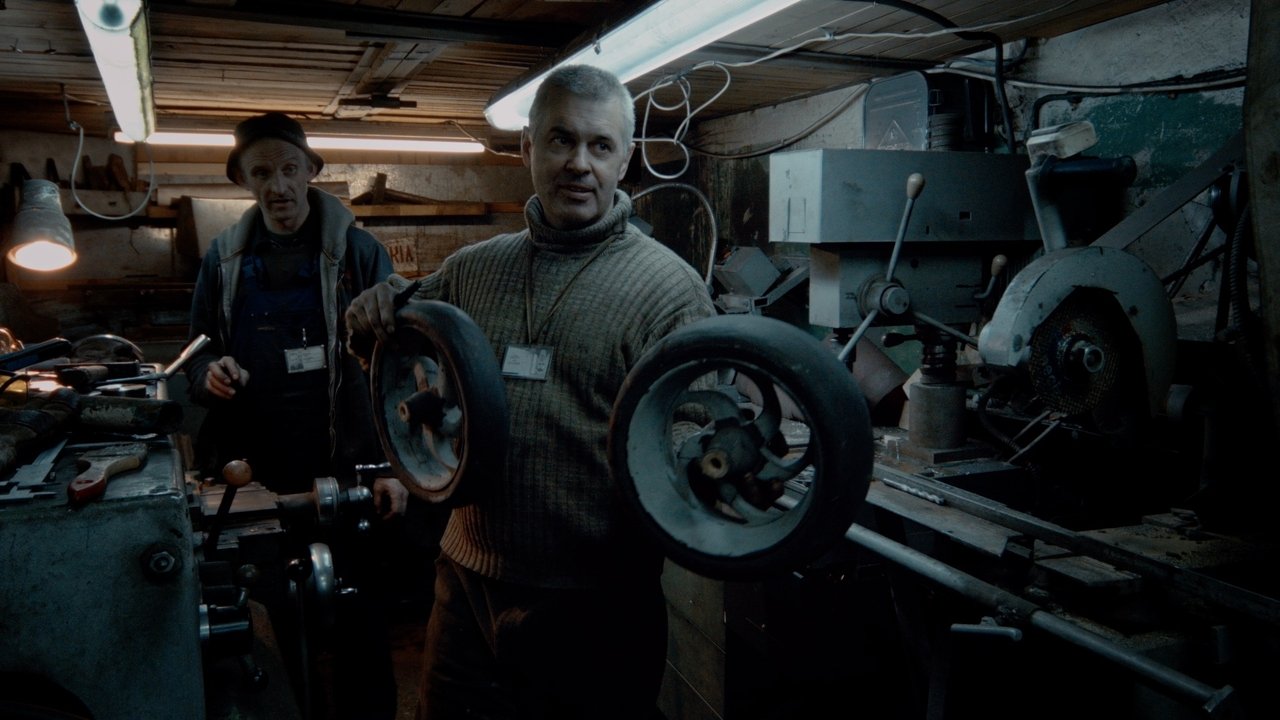
Rimantas Alekna is a skillful craftsman who established the prison's carpentry workshop in which 43 prisoners are now employed. During his spare time, he makes wooden models of Harley Davidson motorcycles, which for him symbolize freedom. Rolandas Cerapokas, who wants to become a father to enable him to bring up a child as a decent member of the society, marries an imprisoned woman who is also sentenced for a murder.
Bernard Stiegler is a world-renowned contemporary French philosopher, and, as a former prisoner himself, he takes great social responsibility and tries to create alternative models of contemporary society. Audrius Mickevicius is the fourth character with his voice-over; he is travelling through the stages of grief. The film's structure is shaped around and driven by its "Emotional Curve".
It is the pivot and main reference for the script. The film's emotional structure is inspired by the five stages of grief conceived by American psychiatrist Elizabeth Kubler-Ross as explained in her book "On Death and Dying". The structure of grief is a universal and common structure of the emotional change people experience when facing death: shock - denial - anger - resignation - acceptance.
We modified Kubler-Ross' structure of grief, removing the stage of anger and adding a stage of commitment as a dimension for social responsibility. Five stages of emotional structure - shock - denial -resignation acceptance - commitment - shape the film's story..