


In America
In 1982, the Sullivan family-Johnny (played by Paddy Considine), Sarah (Samantha Morton), and their two daughters, Christy (Sarah Bolger) and Ariel (Emma Bolger), enter the United States from Ireland…

In America
In 1982, the Sullivan family-Johnny (played by Paddy Considine), Sarah (Samantha Morton), and their two daughters, Christy (Sarah Bolger) and Ariel (Emma Bolger), enter the United States from Ireland via Canada, arriving on tourist visas. Having recently left behind a painful chapter of their lives, the Sullivans are eager to start anew in New York City, even though they carry with them emotional scars and unresolved grief from their past. Johnny, an aspiring actor, had been working in Canada, but the move to the U.S. is both a fresh start and a leap of faith. They soon settle in Hell's Kitchen, a gritty, impoverished Manhattan neighborhood known for its crumbling tenements and rough atmosphere. Their building is filled with a host of colorful and troubled individuals including drug addicts, transvestites, and loners, most notably Mateo Kuamey (Djimon Hounsou), a reclusive Nigerian artist and photographer who lives a secluded and quiet existence within the same building. At the heart of the Sullivan family's quiet turmoil is the tragic loss of their young son, Frankie, who died of a brain tumor at the age of five. The pain of his death lingers heavily, particularly for Johnny, whose once devout Catholic faith has eroded. He has grown emotionally numb and distant, unable to connect with his feelings or fully engage with his family. His grief has taken a toll on their relationships, particularly his bond with Sarah and the children. Amid this sadness, Christy, the elder daughter, holds onto a mystical belief: that Frankie has granted her three wishes, which she intends to use wisely-only in the most desperate and consequential moments of their lives. The belief becomes a subtle spiritual thread that runs through the family's trials, offering Christy a way to hold on to her brother's memory while helping guide her through the hardships they encounter in their new home. Sarah, showing immense resilience and determination, quickly finds a job at a local ice cream parlor to support the family financially. Johnny, meanwhile, throws himself into the search for acting roles, auditioning for every opportunity that might offer a break, but he meets only rejection and failure. As their dreams clash with harsh reality, they live from hand to mouth. Despite the financial stress, the family initially experiences joy and closeness, fueled by the hope of a better life and the novelty of their new surroundings. Christy records their lives with a cherished camcorder, preserving moments of joy and sorrow alike. During a sweltering New York summer, the Sullivans spend part of their dwindling savings to enjoy the air conditioning of a movie theater, watching *E.T. the Extra-Terrestrial* together as a temporary escape from the oppressive heat and the growing tension between Johnny and Sarah. In a moment of weakness and frustration, Johnny recklessly loses money at a carnival game, desperately trying to win a large stuffed toy for Ariel. He persists to the point of financial foolishness, but eventually wins it back-a hollow triumph that reflects his emotional instability and need for control. As the heat wave intensifies, so do the pressures of life in America. Sarah discovers she is pregnant, further straining their already tight finances and fragile emotional stability. To help make ends meet, Johnny begins working as a taxi driver, adding to his feelings of disappointment over unfulfilled ambitions. He also wants to afford the tuition for the girls to attend Catholic school, believing education will offer them a better path. The story takes a compassionate turn when, on Halloween, Christy and Ariel visit Mateo's apartment while trick-or-treating. Despite Mateo's intimidating demeanor, the girls are drawn to his quiet gentleness. Sarah invites him over for dinner, and the family soon learns that Mateo is terminally ill with AIDS, a fact that explains both his isolation and his subdued sadness. Over time, Mateo forms a touching friendship with the Sullivans, particularly the children. As Sarah's pregnancy progresses, Mateo's health declines sharply. In one incident, he collapses and Christy attempts to resuscitate him using CPR, despite neighbors warning her not to touch him due to his illness. This powerful moment illustrates both the stigma surrounding AIDS at the time and Christy's innocence and compassion. Eventually, Sarah goes into labor early, and the baby is born in critical condition, requiring a blood transfusion. Fearing infected blood, how Mateo contracted HIV, Johnny and Sarah hesitate, afraid of putting their child at risk. As tensions boil over, Sarah breaks down and blames Johnny for Frankie's death in a devastating emotional confrontation. However, they eventually agree to the transfusion when it is discovered that Christy has a compatible blood type and can safely donate. As the transfusion saves the newborn, they simultaneously receive news of Mateo's death. In a final act of generosity, it is revealed that Mateo used a hidden trust fund to pay off the family's substantial hospital bills before he died. This unexpected gesture provides the Sullivans with not only financial relief but also emotional closure. In honor of his selflessness and the bond they shared, the baby is given the middle name Mateo. In the aftermath, Johnny begins to emerge from his emotional paralysis. He starts to heal, letting go of his guilt and finally mourning Frankie in a healthy way. His emotional breakthrough coincides with receiving his first small role in A Chorus Line on Broadway, his long-awaited break. The film closes with a sense of rebirth and hope. The Sullivans host a baby shower in their apartment, joined by the eclectic group of neighbors who have come to respect them. Together, the family looks out at the New York skyline, now filled with a sense of promise. Christy gazes up at the stars, searching for Mateo, a quiet tribute to the man who changed their lives with compassion and grace.
In America
Drama
Film Details
In 1982, the Sullivan family-Johnny (played by Paddy Considine), Sarah (Samantha Morton), and their two daughters, Christy (Sarah Bolger) and Ariel (Emma Bolger), enter the United States from Ireland via Canada, arriving on tourist visas. Having recently left behind a painful chapter of their lives, the Sullivans are eager to start anew in New York City, even though they carry with them emotional scars and unresolved grief from their past. Johnny, an aspiring actor, had been working in Canada, but the move to the U.S.
is both a fresh start and a leap of faith. They soon settle in Hell's Kitchen, a gritty, impoverished Manhattan neighborhood known for its crumbling tenements and rough atmosphere. Their building is filled with a host of colorful and troubled individuals including drug addicts, transvestites, and loners, most notably Mateo Kuamey (Djimon Hounsou), a reclusive Nigerian artist and photographer who lives a secluded and quiet existence within the same building.
At the heart of the Sullivan family's quiet turmoil is the tragic loss of their young son, Frankie, who died of a brain tumor at the age of five. The pain of his death lingers heavily, particularly for Johnny, whose once devout Catholic faith has eroded. He has grown emotionally numb and distant, unable to connect with his feelings or fully engage with his family.
His grief has taken a toll on their relationships, particularly his bond with Sarah and the children. Amid this sadness, Christy, the elder daughter, holds onto a mystical belief: that Frankie has granted her three wishes, which she intends to use wisely-only in the most desperate and consequential moments of their lives. The belief becomes a subtle spiritual thread that runs through the family's trials, offering Christy a way to hold on to her brother's memory while helping guide her through the hardships they encounter in their new home.
Sarah, showing immense resilience and determination, quickly finds a job at a local ice cream parlor to support the family financially. Johnny, meanwhile, throws himself into the search for acting roles, auditioning for every opportunity that might offer a break, but he meets only rejection and failure. As their dreams clash with harsh reality, they live from hand to mouth.
Despite the financial stress, the family initially experiences joy and closeness, fueled by the hope of a better life and the novelty of their new surroundings. Christy records their lives with a cherished camcorder, preserving moments of joy and sorrow alike. During a sweltering New York summer, the Sullivans spend part of their dwindling savings to enjoy the air conditioning of a movie theater, watching *E.T.
the Extra-Terrestrial* together as a temporary escape from the oppressive heat and the growing tension between Johnny and Sarah. In a moment of weakness and frustration, Johnny recklessly loses money at a carnival game, desperately trying to win a large stuffed toy for Ariel. He persists to the point of financial foolishness, but eventually wins it back-a hollow triumph that reflects his emotional instability and need for control.
As the heat wave intensifies, so do the pressures of life in America. Sarah discovers she is pregnant, further straining their already tight finances and fragile emotional stability. To help make ends meet, Johnny begins working as a taxi driver, adding to his feelings of disappointment over unfulfilled ambitions.
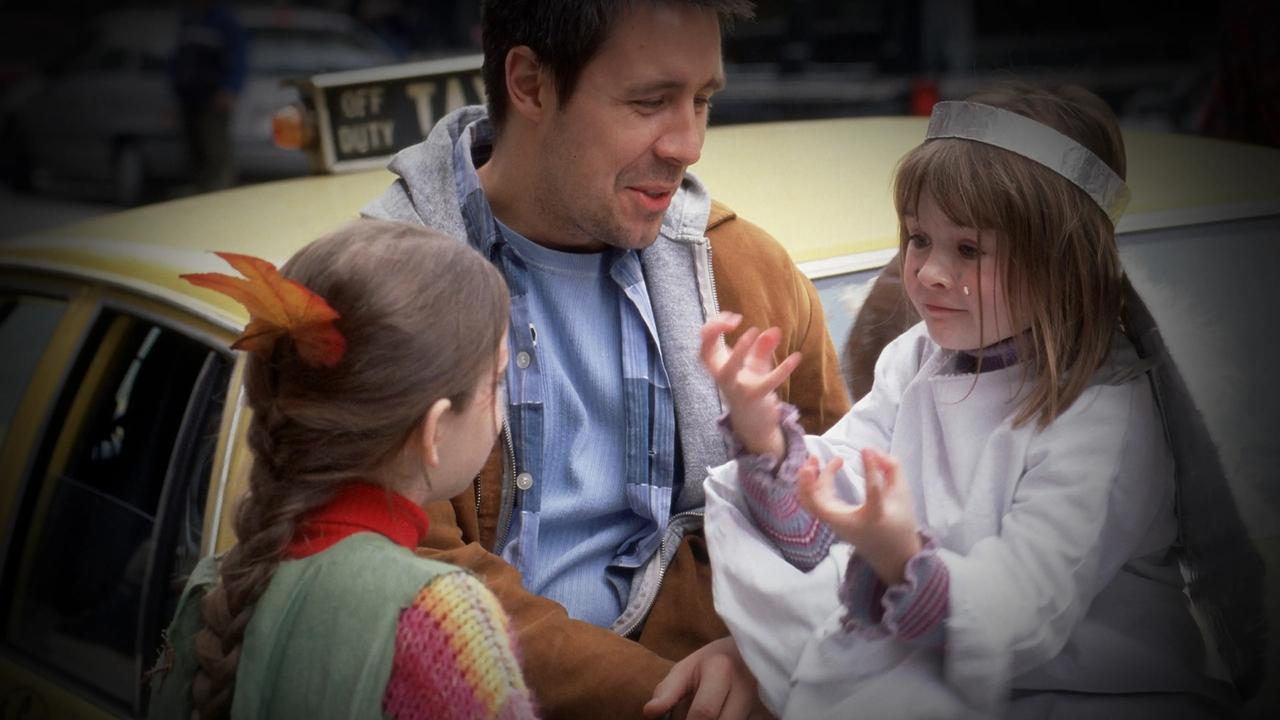
He also wants to afford the tuition for the girls to attend Catholic school, believing education will offer them a better path. The story takes a compassionate turn when, on Halloween, Christy and Ariel visit Mateo's apartment while trick-or-treating. Despite Mateo's intimidating demeanor, the girls are drawn to his quiet gentleness.
Sarah invites him over for dinner, and the family soon learns that Mateo is terminally ill with AIDS, a fact that explains both his isolation and his subdued sadness. Over time, Mateo forms a touching friendship with the Sullivans, particularly the children. As Sarah's pregnancy progresses, Mateo's health declines sharply.
In one incident, he collapses and Christy attempts to resuscitate him using CPR, despite neighbors warning her not to touch him due to his illness. This powerful moment illustrates both the stigma surrounding AIDS at the time and Christy's innocence and compassion. Eventually, Sarah goes into labor early, and the baby is born in critical condition, requiring a blood transfusion.
Fearing infected blood, how Mateo contracted HIV, Johnny and Sarah hesitate, afraid of putting their child at risk. As tensions boil over, Sarah breaks down and blames Johnny for Frankie's death in a devastating emotional confrontation. However, they eventually agree to the transfusion when it is discovered that Christy has a compatible blood type and can safely donate.
As the transfusion saves the newborn, they simultaneously receive news of Mateo's death. In a final act of generosity, it is revealed that Mateo used a hidden trust fund to pay off the family's substantial hospital bills before he died. This unexpected gesture provides the Sullivans with not only financial relief but also emotional closure.
In honor of his selflessness and the bond they shared, the baby is given the middle name Mateo. In the aftermath, Johnny begins to emerge from his emotional paralysis. He starts to heal, letting go of his guilt and finally mourning Frankie in a healthy way.
His emotional breakthrough coincides with receiving his first small role in A Chorus Line on Broadway, his long-awaited break. The film closes with a sense of rebirth and hope. The Sullivans host a baby shower in their apartment, joined by the eclectic group of neighbors who have come to respect them.
Together, the family looks out at the New York skyline, now filled with a sense of promise. Christy gazes up at the stars, searching for Mateo, a quiet tribute to the man who changed their lives with compassion and grace..