


Manderlay
The principal seven divisions are each populated by a single adult slave at Manderlay, who congregate daily and converse on a "parade ground," with Roman numerals of the numbers 1 through 7 designatin…

Manderlay
The principal seven divisions are each populated by a single adult slave at Manderlay, who congregate daily and converse on a "parade ground," with Roman numerals of the numbers 1 through 7 designating where each slave stands. "Mam's Law" contains further provisions against the use of cash by slaves, or the felling of trees on the property for timber. All of this information disgusts Grace and inspires her to take charge of the plantation in order to punish the slave owners and prepare the slaves for life as free individuals. In order to guarantee that the former slaves will not continue to be exploited, no longer as slaves but instead as sharecroppers, Grace orders Joseph to draw up contracts for all Manderlay's inhabitants, institutionalizing a form of cooperative living in which the white family works as slaves and the blacks collectively own the plantation and its crops. Throughout this process, Grace lectures all those present about the notions of freedom and democracy, using rhetoric entirely in keeping with the ideology of racial equality which most contemporary Americans had yet to embrace. She is challenged by Timothy, who will turn out to be a trickster and she begins to get sexual fantasies, making him a fetish, as it is suggested that she is sexually starved and hasn't been intimate. With these distractions, as the film progresses, Grace fails to embed these principles in Manderlay's community in a form she considers satisfactory. Furthermore, her suggestions for improving the conditions of the community backfire on several occasions, such as using the surrounding trees for timber, which leaves the crops vulnerable to dust storms. After a year of such tribulations, the community harvests its cotton and successfully sells it, marking the high point of Grace's involvement. After her gangsters leave and thus her armed protection, Timothy forcefully grabs her as she seeks to bring him dinner. Grace is now in a submissive position, instead of a leader, and her progressive ideals fall around her ankles, as she is stripped by Timothy. Subsequently, she painfully has sex with him, as he puts the handkerchief over her face and aggressive penetrates her in a fashion of used trash, an object, suggesting that he unleashes his anger and frustrations that he has for her, using her sexual fantasies against her. She screams in pain and ecstasy, but while sleeping, Wilhelm report that some has stolen and gambled away all of the cotton profits. The conversation is suggestive that others heard her being sexually conquered by Timothy, and she feels her shame at the joke she made to the gangsters as they left, and now not being able to awaken Timothy, as he is drunk. It is revealed that Timothy is actually the one who has stolen and gambled their earnings, and Grace finds out the whole truth, that he lied to her and tricked her into bed, pretending to be a noble African, but was just a womanizing gambler and a drinker. Finally admitting her failure, Grace contacts her father and attempts to leave the plantation only to be stopped by the plantation's blacks. At this point it is revealed that "Mam's Law" was not conceived and enforced by Mam or any of the other whites, but instead by Wilhelm, the community's eldest member, as a means of maintaining the status quo after the abolition of slavery, protecting the blacks from a hostile outside world. The people of Manderlay then tell Grace to punish Timothy for what he did by whipping him. She obliges, to release her hurt at giving her body over to him to have him use her painfully and ultimately having tricked her into bed as if she were just another whore, and she whips him with all of her might as a result. Grace then finds a letter from her father, explaining that he came to get her while she was whipping Timothy. He assumed that this was what she meant by claiming that Manderlay had come upon new times and that she had accepted them as slaves. Grace then runs away to another unrevealed place. As in many von Trier films, the idealistic main character becomes frustrated by the reality he or she encounters.
Manderlay
Drama
Film Details


The principal seven divisions are each populated by a single adult slave at Manderlay, who congregate daily and converse on a "parade ground," with Roman numerals of the numbers 1 through 7 designating where each slave stands. "Mam's Law" contains further provisions against the use of cash by slaves, or the felling of trees on the property for timber. All of this information disgusts Grace and inspires her to take charge of the plantation in order to punish the slave owners and prepare the slaves for life as free individuals.
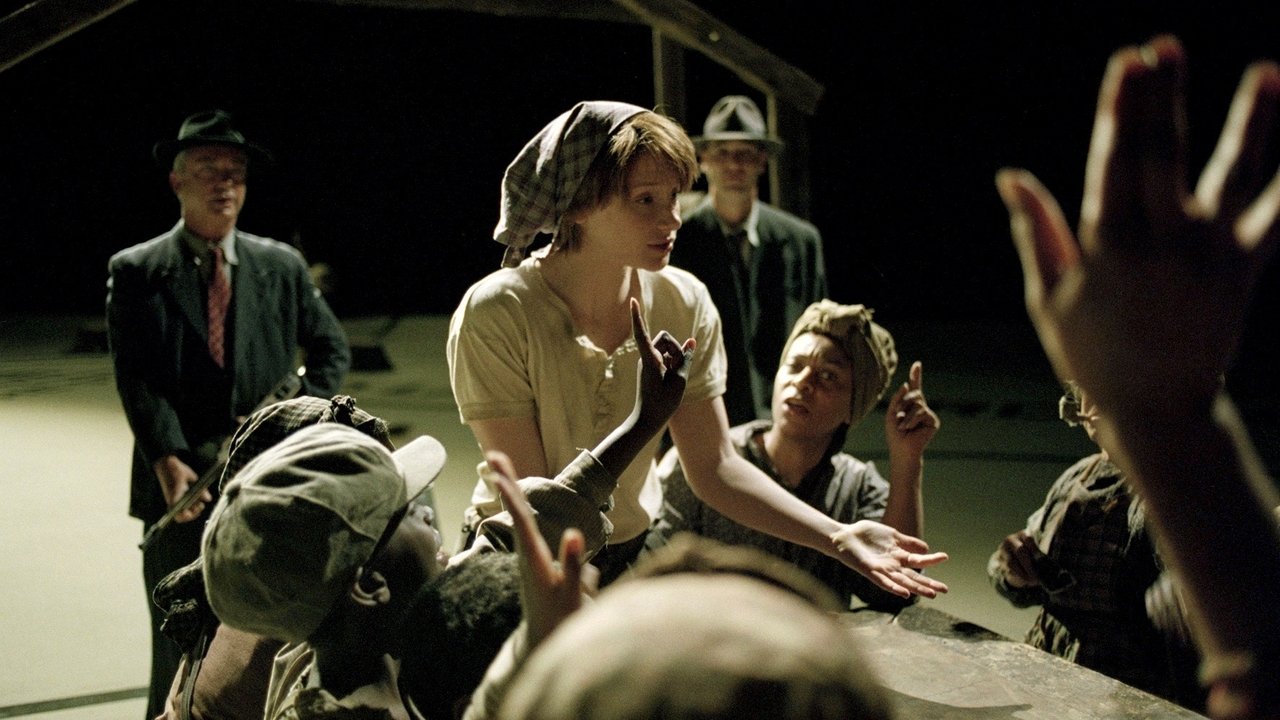
In order to guarantee that the former slaves will not continue to be exploited, no longer as slaves but instead as sharecroppers, Grace orders Joseph to draw up contracts for all Manderlay's inhabitants, institutionalizing a form of cooperative living in which the white family works as slaves and the blacks collectively own the plantation and its crops. Throughout this process, Grace lectures all those present about the notions of freedom and democracy, using rhetoric entirely in keeping with the ideology of racial equality which most contemporary Americans had yet to embrace. She is challenged by Timothy, who will turn out to be a trickster and she begins to get sexual fantasies, making him a fetish, as it is suggested that she is sexually starved and hasn't been intimate.
With these distractions, as the film progresses, Grace fails to embed these principles in Manderlay's community in a form she considers satisfactory. Furthermore, her suggestions for improving the conditions of the community backfire on several occasions, such as using the surrounding trees for timber, which leaves the crops vulnerable to dust storms. After a year of such tribulations, the community harvests its cotton and successfully sells it, marking the high point of Grace's involvement.
After her gangsters leave and thus her armed protection, Timothy forcefully grabs her as she seeks to bring him dinner. Grace is now in a submissive position, instead of a leader, and her progressive ideals fall around her ankles, as she is stripped by Timothy. Subsequently, she painfully has sex with him, as he puts the handkerchief over her face and aggressive penetrates her in a fashion of used trash, an object, suggesting that he unleashes his anger and frustrations that he has for her, using her sexual fantasies against her.
She screams in pain and ecstasy, but while sleeping, Wilhelm report that some has stolen and gambled away all of the cotton profits. The conversation is suggestive that others heard her being sexually conquered by Timothy, and she feels her shame at the joke she made to the gangsters as they left, and now not being able to awaken Timothy, as he is drunk. It is revealed that Timothy is actually the one who has stolen and gambled their earnings, and Grace finds out the whole truth, that he lied to her and tricked her into bed, pretending to be a noble African, but was just a womanizing gambler and a drinker.
Finally admitting her failure, Grace contacts her father and attempts to leave the plantation only to be stopped by the plantation's blacks. At this point it is revealed that "Mam's Law" was not conceived and enforced by Mam or any of the other whites, but instead by Wilhelm, the community's eldest member, as a means of maintaining the status quo after the abolition of slavery, protecting the blacks from a hostile outside world. The people of Manderlay then tell Grace to punish Timothy for what he did by whipping him.
She obliges, to release her hurt at giving her body over to him to have him use her painfully and ultimately having tricked her into bed as if she were just another whore, and she whips him with all of her might as a result. Grace then finds a letter from her father, explaining that he came to get her while she was whipping Timothy. He assumed that this was what she meant by claiming that Manderlay had come upon new times and that she had accepted them as slaves.
Grace then runs away to another unrevealed place. As in many von Trier films, the idealistic main character becomes frustrated by the reality he or she encounters..