


Norwood, Where Legends Were Born
Dubbed in : English ( Original )
From the birth of the Camaro and Firebird Trans Am to a bitter labor strike and a controversial closure, discover the untold story of Norwood Assembly—and the workers whose legacy helped shape America…
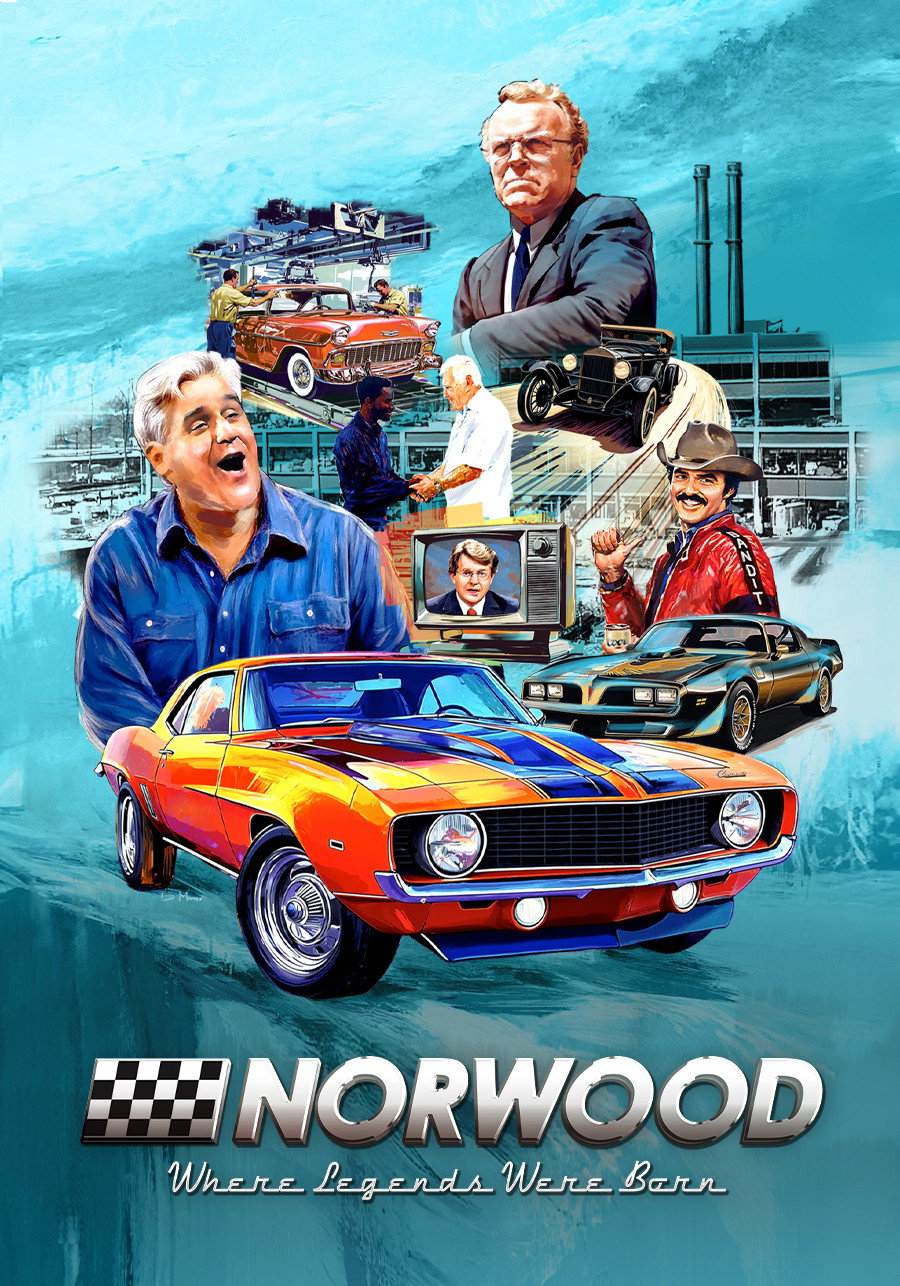
Norwood, Where Legends Were Born
Dubbed in : English ( Original )
From the birth of the Camaro and Firebird Trans Am to a bitter labor strike and a controversial closure, discover the untold story of Norwood Assembly—and the workers whose legacy helped shape American automotive history. In 1923, General Motors' Norwood Assembly plant began producing Chevrolet automobiles in Norwood, Ohio. Over the next six decades, the factory became an important part of GM's manufacturing network, introducing new production techniques and building millions of vehicles. Its most famous products would become two icons of American automotive culture: the Chevrolet Camaro and the Pontiac Firebird Trans Am. Norwood, Where Legends Were Born chronicles the plant's history through archival footage, historical accounts, and interviews with former employees, automotive historians, and notable personalities, including Jay Leno and Burt Reynolds. The documentary explores the factory's early years, when its workforce helped establish Norwood as a major industrial employer, and follows its evolution through the Great Depression, World War II, and the postwar expansion of the American automobile industry. As the plant grew, so did the importance of its workforce and organized labor. The documentary examines the labor movement's role in creating better wages and working conditions, including Norwood's participation in the 1937 sit-down strike movement. These struggles helped shape the relationship between workers and management for decades to come. By the late 1960s, Norwood had become closely associated with the Camaro and Firebird, producing performance cars that captured the spirit of the muscle car era. Yet the plant's history was also marked by conflict. In 1972, a lengthy strike disrupted production and became a defining chapter in the relationship between General Motors and the United Auto Workers. The film explores the causes and consequences of the strike and the lasting effects it had on the plant and its employees. During the 1980s, the American automobile industry faced growing competition and significant changes in manufacturing strategy. General Motors began restructuring its operations and announced plans to close several older facilities. Norwood's workers and community were left questioning why a plant they believed could compete on productivity and quality was being targeted for closure. The documentary follows the controversy surrounding GM's decision, including competing explanations for the plant's fate and theories about the company's broader plans for Camaro and Firebird production. Workers, union representatives, and local leaders made efforts to reverse the decision, while plant management attempted to maintain morale and demonstrate that Norwood could continue producing high-quality vehicles. As the final days approached, employees continued building cars while preparing to leave jobs that had defined their lives for generations. The plant's final vehicle, a Camaro IROC, became a symbol of both pride in their work and the loss facing the workforce. Employees gathered to witness the end of production, and the last car was raffled to a plant worker. On August 26, 1987, Norwood Assembly closed. More than 4,000 workers faced unemployment, and the city lost a major employer that had helped shape its identity for 64 years. The factory was soon demolished, leaving behind memories, friendships, and the skills of the people who had worked there. Through the voices of those who experienced it, Norwood, Where Legends Were Born preserves the story of a factory that helped shape American automotive history. It examines the cars that made Norwood famous, the labor struggles that defined its workforce, and the unresolved questions surrounding its closure.
Norwood, Where Legends Were Born
Documentary
Film Details
From the birth of the Camaro and Firebird Trans Am to a bitter labor strike and a controversial closure, discover the untold story of Norwood Assembly—and the workers whose legacy helped shape American automotive history. In 1923, General Motors' Norwood Assembly plant began producing Chevrolet automobiles in Norwood, Ohio. Over the next six decades, the factory became an important part of GM's manufacturing network, introducing new production techniques and building millions of vehicles.
Its most famous products would become two icons of American automotive culture: the Chevrolet Camaro and the Pontiac Firebird Trans Am. Norwood, Where Legends Were Born chronicles the plant's history through archival footage, historical accounts, and interviews with former employees, automotive historians, and notable personalities, including Jay Leno and Burt Reynolds. The documentary explores the factory's early years, when its workforce helped establish Norwood as a major industrial employer, and follows its evolution through the Great Depression, World War II, and the postwar expansion of the American automobile industry.
As the plant grew, so did the importance of its workforce and organized labor. The documentary examines the labor movement's role in creating better wages and working conditions, including Norwood's participation in the 1937 sit-down strike movement. These struggles helped shape the relationship between workers and management for decades to come.
By the late 1960s, Norwood had become closely associated with the Camaro and Firebird, producing performance cars that captured the spirit of the muscle car era. Yet the plant's history was also marked by conflict. In 1972, a lengthy strike disrupted production and became a defining chapter in the relationship between General Motors and the United Auto Workers.
The film explores the causes and consequences of the strike and the lasting effects it had on the plant and its employees. During the 1980s, the American automobile industry faced growing competition and significant changes in manufacturing strategy. General Motors began restructuring its operations and announced plans to close several older facilities.
Norwood's workers and community were left questioning why a plant they believed could compete on productivity and quality was being targeted for closure. The documentary follows the controversy surrounding GM's decision, including competing explanations for the plant's fate and theories about the company's broader plans for Camaro and Firebird production. Workers, union representatives, and local leaders made efforts to reverse the decision, while plant management attempted to maintain morale and demonstrate that Norwood could continue producing high-quality vehicles.
As the final days approached, employees continued building cars while preparing to leave jobs that had defined their lives for generations. The plant's final vehicle, a Camaro IROC, became a symbol of both pride in their work and the loss facing the workforce. Employees gathered to witness the end of production, and the last car was raffled to a plant worker.
On August 26, 1987, Norwood Assembly closed. More than 4,000 workers faced unemployment, and the city lost a major employer that had helped shape its identity for 64 years. The factory was soon demolished, leaving behind memories, friendships, and the skills of the people who had worked there.
Through the voices of those who experienced it, Norwood, Where Legends Were Born preserves the story of a factory that helped shape American automotive history. It examines the cars that made Norwood famous, the labor struggles that defined its workforce, and the unresolved questions surrounding its closure..