


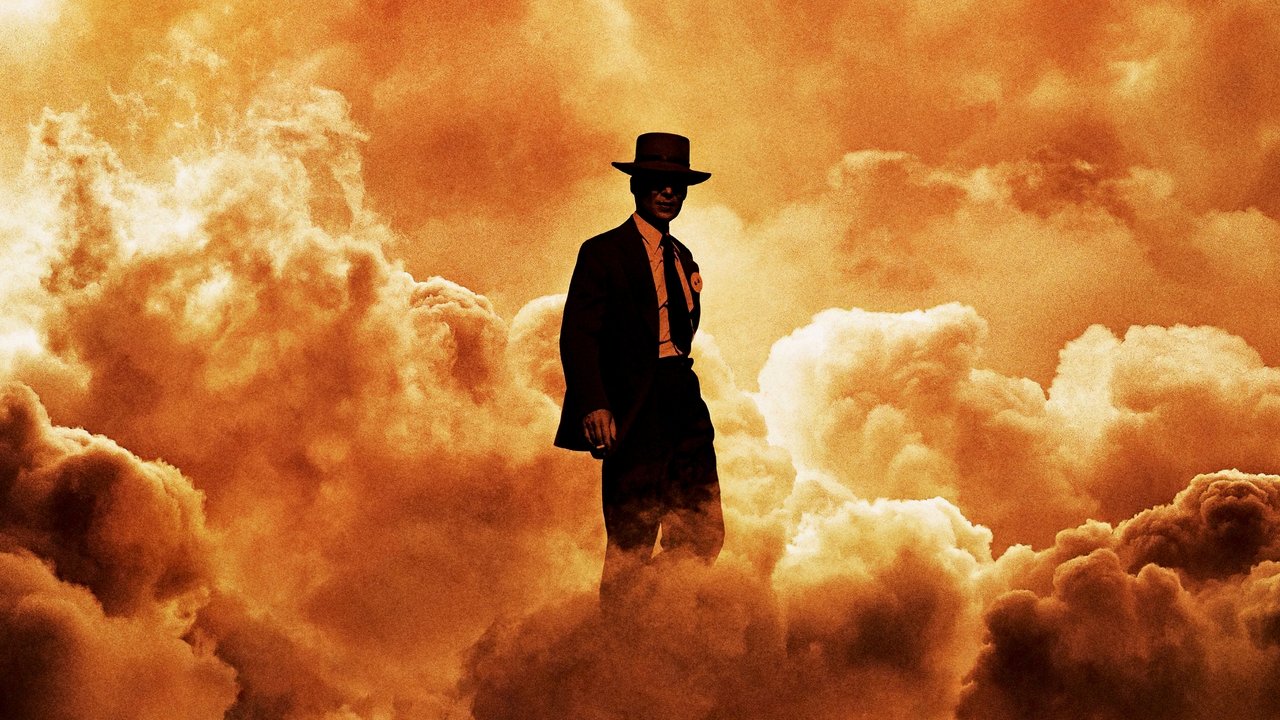
Oppenheimer
Dubbed in : English ( Original ) , German , Italian , DUT
A dramatization of the life story of J. Robert Oppenheimer, the physicist who had a large hand in the development of the atomic bombs that brought an end to World War II. A dramatization of the life s…
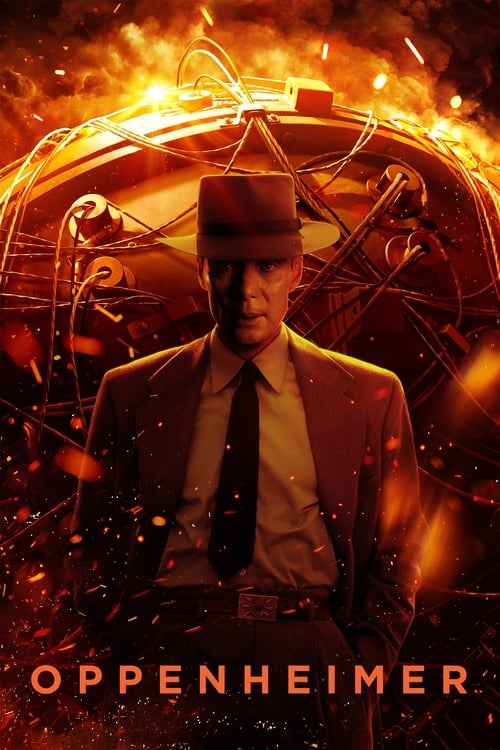
Oppenheimer
Dubbed in : English ( Original ) , German , Italian , DUT
A dramatization of the life story of J. Robert Oppenheimer, the physicist who had a large hand in the development of the atomic bombs that brought an end to World War II. A dramatization of the life story of J. Robert Oppenheimer, the physicist who had a large hand in the development of the atomic bomb, thus helping end World War 2. We see his life from university days all the way to post-WW2, where his fame saw him embroiled in political machinations. J. Robert Oppenheimer, the creator of The Atomic Bomb, is put on trial for his supposed communist ties in the past, all while coming to terms with what it meant to change the history of the world for the sake of winning World War Two. This is the story of how America's Prometheus was cast out by The Gods for giving mankind an unthinkable gift: power unlike any other, the power to destroy the world; the power of Olympus. As America's isolation from World War 1 ends, prominent American theoretical physicist J. Robert Oppenheimer finds himself tasked with performing a miracle. Driven by fear, with the Germans having an overwhelming head start on the race to develop the atomic bomb, the Allies begin the ambitious Manhattan Project. With Oppenheimer at the helm, the Los Alamos Laboratory spearheads a top-secret government endeavour to weaponise theory before the Nazis do. However, nothing can prepare the world for the outcome of the greatest scientific gamble in history: a closely guarded, multibillion-dollar military programme to end all war. After all, no one can be trusted with such a devastating weapon of mass destruction--not even geniuses. The biographical drama follows physicist J. Robert Oppenheimer, the "father of the atomic bomb," detailing his scientific achievements, ethical dilemmas, and involvement in the Manhattan Project. The narrative explores the tension between ambition, morality, and global consequences, as Oppenheimer grapples with the implications of his creation. The film blends historical detail, personal introspection, and political context, emphasizing responsibility, genius, and the profound moral challenges posed by scientific advancement. A vast sphere of fire expands across the nighttime desert as rhythmic stamping grows louder. The image gives way to J. Robert Oppenheimer (Cillian Murphy), whose eyes open as he faces the camera. [FRAME_OPEN: J. Robert Oppenheimer] He is asked to read a statement before a security board and explains that the allegations against him require the context of his life and work. [FRAME_CLOSE: J. Robert Oppenheimer] [NARRATION_OPEN: Senate Aide] A Senate aide asks Lewis Strauss (Robert Downey Jr.) how long Oppenheimer's security hearing lasts. Strauss estimates several days, although the full proceeding takes a month. He says he has read the transcripts and was not permitted to attend because he chaired the Atomic Energy Commission. The aide warns that Oppenheimer remains a divisive figure and that the Senate will ask Strauss about their relationship during his confirmation hearing for Secretary of Commerce. The aide leads Strauss along a corridor and reassures him that confirmation is practically assured. Strauss nevertheless asks what he should say if senators raise Oppenheimer's case. [NARRATION_CLOSE: Senate Aide] In a small, shabby room at the Atomic Energy Commission, prosecutor Roger Robb (Jason Clarke) questions Oppenheimer before a three member Personnel Security Board consisting of Gordon Gray, Ward Evans, and Thomas Morgan. Oppenheimer explains that he travels to Europe to study physics under Patrick Blackett rather than remain at Berkeley. Asked whether he is happier in England, he admits to homesickness and recalls his difficulties in the laboratory. At Cambridge, Oppenheimer repeatedly struggles with equipment and breaks a beaker. Blackett reprimands him for his lack of sleep and orders him to start again. Oppenheimer asks to attend a lecture by Niels Bohr, but Blackett initially tells him to finish coating laboratory plates. After Blackett and the other students leave, Oppenheimer notices a bottle of potassium cyanide. He draws the chemical into a syringe and injects it into an apple intended for Blackett. Oppenheimer then hurries across the quadrangle to Bohr's lecture, where the physicist describes quantum physics as a new way to understand reality. Oppenheimer listens intently and raises a question. During Strauss's Senate hearing, Senator McGee asks about his first meeting with Oppenheimer in 1947. Strauss explains that he recruits Oppenheimer to direct the Institute for Advanced Study at Princeton because of his international scientific reputation. In color, Strauss welcomes Oppenheimer to the Institute, explains that the position includes a house for his family, and shows him around. Oppenheimer asks whether Strauss has a scientific background. Strauss admits that he does not, describing himself as self made. When Oppenheimer questions why Strauss was not involved in the Manhattan Project, Strauss takes offense at his qualification that Einstein was the greatest scientific mind of his own time. The narrative returns to Oppenheimer's early career. After his encounter with Bohr, he pursues theoretical physics in Germany under Max Born. He develops his mathematical abilities and begins establishing his reputation as a physicist. Later, at Berkeley, Oppenheimer builds a leading theoretical physics department and develops relationships with fellow scientists, including Ernest Lawrence (Josh Hartnett), Isidor Rabi (David Krumholtz), and Jean Tatlock (Florence Pugh). His personal life becomes entangled with political activism through his relationships with communist sympathizers, including his brother Frank Oppenheimer (Dylan Arnold) and Tatlock. His association with the Communist Party and its members later becomes a central issue in his security investigation. Oppenheimer marries Kitty (Emily Blunt), and the couple establish a family. His professional reputation grows as he works in theoretical physics, teaches students, and participates in political discussions. During the rise of Nazi Germany, he becomes increasingly concerned about the possibility of a German atomic weapon. Scientists including Leo Szilard (Máté Haumann) and Albert Einstein (Tom Conti) consider the implications of nuclear fission. The prospect of a weapon capable of unprecedented destruction becomes a central concern among physicists and government officials. After the United States enters the Second World War, General Leslie Groves (Matt Damon) recruits Oppenheimer to lead the scientific work of the Manhattan Project. Groves initially questions Oppenheimer's political associations and security risks but recognizes his scientific ability and capacity to coordinate researchers. Oppenheimer accepts the assignment and helps establish the laboratory at Los Alamos, New Mexico. He recruits physicists and other specialists, including Edward Teller (Benny Safdie), Hans Bethe (Gustaf Skarsgard), Richard Feynman (Jack Quaid), and Kenneth Bainbridge (Josh Peck). The scientists work under military supervision, while Oppenheimer manages competing personalities, technical problems, and the urgency of developing the weapon before Germany can produce one. Security officers investigate possible espionage and communist connections among the scientists. Boris Pash (Casey Affleck) questions Oppenheimer about a possible approach by people associated with the Soviet consulate. Oppenheimer explains that he considers whether the American government should inform its Soviet allies about the project, but he does not want information transferred secretly. Groves subsequently questions him about the exchange. Oppenheimer's associations and political sympathies remain a concern even as he assumes greater responsibility for the project. At Los Alamos, the researchers confront the scientific and engineering problems involved in constructing an atomic bomb. Oppenheimer coordinates the laboratory and works with Groves to keep the project moving. The scientists conduct calculations, construct experimental equipment, and prepare the weapon. As Germany's defeat approaches, the urgency of the project changes, but the team continues toward a test of the completed device. On July 16, 1945, the team conducts the Trinity test in the New Mexico desert. Bainbridge and the other scientists prepare for the detonation while Oppenheimer waits for the result. The device explodes, producing a tremendous flash and an expanding fireball. Oppenheimer watches the successful test, and the researchers recognize that they have created a weapon of extraordinary destructive power. The success brings relief and professional triumph, but Oppenheimer begins confronting the consequences of what they have made. The United States subsequently uses atomic bombs against Hiroshima and Nagasaki. Oppenheimer receives public recognition for his contribution to the war effort, but he becomes troubled by the deaths and destruction. He meets President Harry Truman (Gary Oldman) and urges him to consider the consequences of nuclear weapons. Oppenheimer expresses his personal guilt, but Truman rejects the implication that Oppenheimer bears responsibility for the decision to use the bombs. Truman makes clear that the decision belongs to the political leadership and dismisses Oppenheimer's concerns. After the war, Strauss continues his involvement in government and recruits Oppenheimer as a scientific adviser to the Atomic Energy Commission. Oppenheimer's public standing gives him influence over American nuclear policy, but his views increasingly conflict with those of officials who favor expanding the nation's arsenal. Strauss becomes resentful after Oppenheimer dismisses his concerns about exporting radioisotopes during an AEC hearing. Strauss also interprets Oppenheimer's recommendation to negotiate with the Soviet Union as a personal slight. Oppenheimer advocates international control of nuclear weapons, arguing that American and Soviet concessions could prevent an escalating arms race. The Soviet Union detonates its own atomic bomb, intensifying American fears about the balance of power. Strauss suspects that Soviet espionage explains the speed of the Soviet achievement and believes that Oppenheimer's political associations may have compromised the Manhattan Project. Oppenheimer opposes development of the hydrogen bomb, arguing that the technical obstacles and consequences make the program a dangerous course. Edward Teller supports further development of the weapon. Despite Oppenheimer's objections, Truman approves the hydrogen bomb program, and the United States proceeds toward more powerful nuclear weapons. During a visit to the Institute for Advanced Study, Oppenheimer encounters Einstein near a pond. Strauss observes them from a distance and notices that Einstein does not acknowledge him afterward. Strauss concludes that Oppenheimer has said something damaging about him. The conversation remains unexplained, and Strauss becomes increasingly convinced that Oppenheimer has turned the scientific community against him. In the security investigation, Oppenheimer's past political associations become central to the case against him. His brother Frank's communist connections are raised, and testimony from former colleagues is used to question Oppenheimer's judgment and reliability. Groves supports Oppenheimer, explaining his importance to the Manhattan Project, but other witnesses offer damaging assessments. Teller testifies that he lacks confidence in Oppenheimer and recommends that his security clearance be revoked. Oppenheimer's attorney cannot examine the full security file available to the prosecution, and the hearing proceeds as a closed administrative matter rather than a public trial. Strauss denies responsibility for initiating the case and points to William Borden (David Dastmalchian), who wrote to the FBI alleging that Oppenheimer had communist connections. The proceedings nevertheless suggest that Strauss uses Borden to advance his own objective of removing Oppenheimer from political influence. Roger Robb, acting as special counsel to the AEC, questions Oppenheimer about his earlier statements and associations. The board ultimately revokes Oppenheimer's Q clearance, damaging his public standing and preventing him from continuing his previous role in nuclear policy. Oppenheimer's personal relationships also suffer under the pressure of the investigation. Kitty challenges his willingness to accept public humiliation as a means of restoring his reputation. The security decision leaves him isolated from the political process, despite his earlier prominence as the scientist who led the development of the atomic bomb. The consequences of the hearing extend beyond Oppenheimer himself, intensifying divisions among the scientists who worked with him. In the black and white Senate proceedings, Strauss faces questions about his role in the security case. David Hill (Rami Malek) testifies about Strauss's personal motives and the circumstances surrounding Oppenheimer's removal. Strauss insists that he acted in the national interest, but the testimony undermines his credibility. Senators examine the apparent connection between Strauss's resentment and the actions taken against Oppenheimer. The hearing exposes the political maneuvering behind the security proceedings and damages Strauss's prospects for confirmation as Secretary of Commerce. Strauss's Senate aide explains that the nomination may fail despite the expectation that the Senate will confirm him. Strauss remains convinced that Oppenheimer has turned the scientific community against him, beginning with the unexplained exchange beside the pond. The aide suggests that Einstein and Oppenheimer may have discussed something more important than Strauss. Strauss reacts angrily, unable to accept that the conversation might not have concerned him. In 1963, President Lyndon B. Johnson (Hap Lawrence) presents Oppenheimer with the Enrico Fermi Award as a gesture of political rehabilitation. Oppenheimer accepts the medal at a formal ceremony attended by Kitty and former colleagues. Frank embraces him, Lawrence congratulates him, and Teller approaches to offer his hand. Kitty refuses to shake Teller's hand, leaving his gesture unanswered. [FRAME_OPEN: J. Robert Oppenheimer] The film returns to the pond at the Institute for Advanced Study. Oppenheimer picks up Einstein's hat after the wind blows it away and hands it back to him. Einstein reflects on the honors Oppenheimer will receive and the people who will congratulate him, explaining that such recognition will serve those offering forgiveness rather than Oppenheimer himself. Strauss approaches from the hill, but Einstein passes him without acknowledgment. Oppenheimer asks Einstein about the calculations they once considered concerning the possibility that a nuclear chain reaction could destroy the world. Einstein confirms that he remembers the discussion. Oppenheimer concludes that they have indeed started such a chain reaction. The sound of stamping feet grows faster as Oppenheimer imagines the world's expanding nuclear arsenals. He closes his eyes, and the image cuts to black. [FRAME_CLOSE: J. Robert Oppenheimer]
Oppenheimer
Biography · Drama
Film Details



A dramatization of the life story of J. Robert Oppenheimer, the physicist who had a large hand in the development of the atomic bombs that brought an end to World War II. A dramatization of the life story of J.
Robert Oppenheimer, the physicist who had a large hand in the development of the atomic bomb, thus helping end World War 2. We see his life from university days all the way to post-WW2, where his fame saw him embroiled in political machinations. J.
Robert Oppenheimer, the creator of The Atomic Bomb, is put on trial for his supposed communist ties in the past, all while coming to terms with what it meant to change the history of the world for the sake of winning World War Two. This is the story of how America's Prometheus was cast out by The Gods for giving mankind an unthinkable gift: power unlike any other, the power to destroy the world; the power of Olympus. As America's isolation from World War 1 ends, prominent American theoretical physicist J.
Robert Oppenheimer finds himself tasked with performing a miracle. Driven by fear, with the Germans having an overwhelming head start on the race to develop the atomic bomb, the Allies begin the ambitious Manhattan Project. With Oppenheimer at the helm, the Los Alamos Laboratory spearheads a top-secret government endeavour to weaponise theory before the Nazis do.
However, nothing can prepare the world for the outcome of the greatest scientific gamble in history: a closely guarded, multibillion-dollar military programme to end all war. After all, no one can be trusted with such a devastating weapon of mass destruction--not even geniuses. The biographical drama follows physicist J.
Robert Oppenheimer, the "father of the atomic bomb," detailing his scientific achievements, ethical dilemmas, and involvement in the Manhattan Project. The narrative explores the tension between ambition, morality, and global consequences, as Oppenheimer grapples with the implications of his creation. The film blends historical detail, personal introspection, and political context, emphasizing responsibility, genius, and the profound moral challenges posed by scientific advancement.
A vast sphere of fire expands across the nighttime desert as rhythmic stamping grows louder. The image gives way to J. Robert Oppenheimer (Cillian Murphy), whose eyes open as he faces the camera.
[FRAME_OPEN: J. Robert Oppenheimer] He is asked to read a statement before a security board and explains that the allegations against him require the context of his life and work. [FRAME_CLOSE: J.
Robert Oppenheimer] [NARRATION_OPEN: Senate Aide] A Senate aide asks Lewis Strauss (Robert Downey Jr.) how long Oppenheimer's security hearing lasts. Strauss estimates several days, although the full proceeding takes a month. He says he has read the transcripts and was not permitted to attend because he chaired the Atomic Energy Commission.
The aide warns that Oppenheimer remains a divisive figure and that the Senate will ask Strauss about their relationship during his confirmation hearing for Secretary of Commerce. The aide leads Strauss along a corridor and reassures him that confirmation is practically assured. Strauss nevertheless asks what he should say if senators raise Oppenheimer's case.
[NARRATION_CLOSE: Senate Aide] In a small, shabby room at the Atomic Energy Commission, prosecutor Roger Robb (Jason Clarke) questions Oppenheimer before a three member Personnel Security Board consisting of Gordon Gray, Ward Evans, and Thomas Morgan. Oppenheimer explains that he travels to Europe to study physics under Patrick Blackett rather than remain at Berkeley. Asked whether he is happier in England, he admits to homesickness and recalls his difficulties in the laboratory. At Cambridge, Oppenheimer repeatedly struggles with equipment and breaks a beaker.
Blackett reprimands him for his lack of sleep and orders him to start again. Oppenheimer asks to attend a lecture by Niels Bohr, but Blackett initially tells him to finish coating laboratory plates. After Blackett and the other students leave, Oppenheimer notices a bottle of potassium cyanide.
He draws the chemical into a syringe and injects it into an apple intended for Blackett. Oppenheimer then hurries across the quadrangle to Bohr's lecture, where the physicist describes quantum physics as a new way to understand reality. Oppenheimer listens intently and raises a question. During Strauss's Senate hearing, Senator McGee asks about his first meeting with Oppenheimer in 1947.
Strauss explains that he recruits Oppenheimer to direct the Institute for Advanced Study at Princeton because of his international scientific reputation. In color, Strauss welcomes Oppenheimer to the Institute, explains that the position includes a house for his family, and shows him around. Oppenheimer asks whether Strauss has a scientific background.
Strauss admits that he does not, describing himself as self made. When Oppenheimer questions why Strauss was not involved in the Manhattan Project, Strauss takes offense at his qualification that Einstein was the greatest scientific mind of his own time. The narrative returns to Oppenheimer's early career. After his encounter with Bohr, he pursues theoretical physics in Germany under Max Born.
He develops his mathematical abilities and begins establishing his reputation as a physicist. Later, at Berkeley, Oppenheimer builds a leading theoretical physics department and develops relationships with fellow scientists, including Ernest Lawrence (Josh Hartnett), Isidor Rabi (David Krumholtz), and Jean Tatlock (Florence Pugh). His personal life becomes entangled with political activism through his relationships with communist sympathizers, including his brother Frank Oppenheimer (Dylan Arnold) and Tatlock.
His association with the Communist Party and its members later becomes a central issue in his security investigation. Oppenheimer marries Kitty (Emily Blunt), and the couple establish a family. His professional reputation grows as he works in theoretical physics, teaches students, and participates in political discussions. During the rise of Nazi Germany, he becomes increasingly concerned about the possibility of a German atomic weapon.
Scientists including Leo Szilard (Máté Haumann) and Albert Einstein (Tom Conti) consider the implications of nuclear fission. The prospect of a weapon capable of unprecedented destruction becomes a central concern among physicists and government officials. After the United States enters the Second World War, General Leslie Groves (Matt Damon) recruits Oppenheimer to lead the scientific work of the Manhattan Project. Groves initially questions Oppenheimer's political associations and security risks but recognizes his scientific ability and capacity to coordinate researchers.
Oppenheimer accepts the assignment and helps establish the laboratory at Los Alamos, New Mexico. He recruits physicists and other specialists, including Edward Teller (Benny Safdie), Hans Bethe (Gustaf Skarsgard), Richard Feynman (Jack Quaid), and Kenneth Bainbridge (Josh Peck). The scientists work under military supervision, while Oppenheimer manages competing personalities, technical problems, and the urgency of developing the weapon before Germany can produce one. Security officers investigate possible espionage and communist connections among the scientists.
Boris Pash (Casey Affleck) questions Oppenheimer about a possible approach by people associated with the Soviet consulate. Oppenheimer explains that he considers whether the American government should inform its Soviet allies about the project, but he does not want information transferred secretly. Groves subsequently questions him about the exchange.
Oppenheimer's associations and political sympathies remain a concern even as he assumes greater responsibility for the project. At Los Alamos, the researchers confront the scientific and engineering problems involved in constructing an atomic bomb. Oppenheimer coordinates the laboratory and works with Groves to keep the project moving. The scientists conduct calculations, construct experimental equipment, and prepare the weapon.
As Germany's defeat approaches, the urgency of the project changes, but the team continues toward a test of the completed device. On July 16, 1945, the team conducts the Trinity test in the New Mexico desert. Bainbridge and the other scientists prepare for the detonation while Oppenheimer waits for the result. The device explodes, producing a tremendous flash and an expanding fireball.
Oppenheimer watches the successful test, and the researchers recognize that they have created a weapon of extraordinary destructive power. The success brings relief and professional triumph, but Oppenheimer begins confronting the consequences of what they have made. The United States subsequently uses atomic bombs against Hiroshima and Nagasaki. Oppenheimer receives public recognition for his contribution to the war effort, but he becomes troubled by the deaths and destruction.
He meets President Harry Truman (Gary Oldman) and urges him to consider the consequences of nuclear weapons. Oppenheimer expresses his personal guilt, but Truman rejects the implication that Oppenheimer bears responsibility for the decision to use the bombs. Truman makes clear that the decision belongs to the political leadership and dismisses Oppenheimer's concerns. After the war, Strauss continues his involvement in government and recruits Oppenheimer as a scientific adviser to the Atomic Energy Commission.
Oppenheimer's public standing gives him influence over American nuclear policy, but his views increasingly conflict with those of officials who favor expanding the nation's arsenal. Strauss becomes resentful after Oppenheimer dismisses his concerns about exporting radioisotopes during an AEC hearing. Strauss also interprets Oppenheimer's recommendation to negotiate with the Soviet Union as a personal slight.
Oppenheimer advocates international control of nuclear weapons, arguing that American and Soviet concessions could prevent an escalating arms race. The Soviet Union detonates its own atomic bomb, intensifying American fears about the balance of power. Strauss suspects that Soviet espionage explains the speed of the Soviet achievement and believes that Oppenheimer's political associations may have compromised the Manhattan Project. Oppenheimer opposes development of the hydrogen bomb, arguing that the technical obstacles and consequences make the program a dangerous course.
Edward Teller supports further development of the weapon. Despite Oppenheimer's objections, Truman approves the hydrogen bomb program, and the United States proceeds toward more powerful nuclear weapons. During a visit to the Institute for Advanced Study, Oppenheimer encounters Einstein near a pond. Strauss observes them from a distance and notices that Einstein does not acknowledge him afterward.
Strauss concludes that Oppenheimer has said something damaging about him. The conversation remains unexplained, and Strauss becomes increasingly convinced that Oppenheimer has turned the scientific community against him. In the security investigation, Oppenheimer's past political associations become central to the case against him. His brother Frank's communist connections are raised, and testimony from former colleagues is used to question Oppenheimer's judgment and reliability.
Groves supports Oppenheimer, explaining his importance to the Manhattan Project, but other witnesses offer damaging assessments. Teller testifies that he lacks confidence in Oppenheimer and recommends that his security clearance be revoked. Oppenheimer's attorney cannot examine the full security file available to the prosecution, and the hearing proceeds as a closed administrative matter rather than a public trial. Strauss denies responsibility for initiating the case and points to William Borden (David Dastmalchian), who wrote to the FBI alleging that Oppenheimer had communist connections.
The proceedings nevertheless suggest that Strauss uses Borden to advance his own objective of removing Oppenheimer from political influence. Roger Robb, acting as special counsel to the AEC, questions Oppenheimer about his earlier statements and associations. The board ultimately revokes Oppenheimer's Q clearance, damaging his public standing and preventing him from continuing his previous role in nuclear policy. Oppenheimer's personal relationships also suffer under the pressure of the investigation.
Kitty challenges his willingness to accept public humiliation as a means of restoring his reputation. The security decision leaves him isolated from the political process, despite his earlier prominence as the scientist who led the development of the atomic bomb. The consequences of the hearing extend beyond Oppenheimer himself, intensifying divisions among the scientists who worked with him. In the black and white Senate proceedings, Strauss faces questions about his role in the security case.
David Hill (Rami Malek) testifies about Strauss's personal motives and the circumstances surrounding Oppenheimer's removal. Strauss insists that he acted in the national interest, but the testimony undermines his credibility. Senators examine the apparent connection between Strauss's resentment and the actions taken against Oppenheimer.
The hearing exposes the political maneuvering behind the security proceedings and damages Strauss's prospects for confirmation as Secretary of Commerce. Strauss's Senate aide explains that the nomination may fail despite the expectation that the Senate will confirm him. Strauss remains convinced that Oppenheimer has turned the scientific community against him, beginning with the unexplained exchange beside the pond. The aide suggests that Einstein and Oppenheimer may have discussed something more important than Strauss.
Strauss reacts angrily, unable to accept that the conversation might not have concerned him. In 1963, President Lyndon B. Johnson (Hap Lawrence) presents Oppenheimer with the Enrico Fermi Award as a gesture of political rehabilitation. Oppenheimer accepts the medal at a formal ceremony attended by Kitty and former colleagues.
Frank embraces him, Lawrence congratulates him, and Teller approaches to offer his hand. Kitty refuses to shake Teller's hand, leaving his gesture unanswered. [FRAME_OPEN: J. Robert Oppenheimer] The film returns to the pond at the Institute for Advanced Study.
Oppenheimer picks up Einstein's hat after the wind blows it away and hands it back to him. Einstein reflects on the honors Oppenheimer will receive and the people who will congratulate him, explaining that such recognition will serve those offering forgiveness rather than Oppenheimer himself. Strauss approaches from the hill, but Einstein passes him without acknowledgment. Oppenheimer asks Einstein about the calculations they once considered concerning the possibility that a nuclear chain reaction could destroy the world.
Einstein confirms that he remembers the discussion. Oppenheimer concludes that they have indeed started such a chain reaction. The sound of stamping feet grows faster as Oppenheimer imagines the world's expanding nuclear arsenals.
He closes his eyes, and the image cuts to black. [FRAME_CLOSE: J. Robert Oppenheimer].