


Quando o Sangue Flui
In the heart of Ipanema, in Rio de Janeiro's vibrant South Zone, lives a couple of vampires: Monique (Marina Lessa Trindade) and Claudie (Kauã Rodriguez). Monique is a talented, impatient, outspoken p…
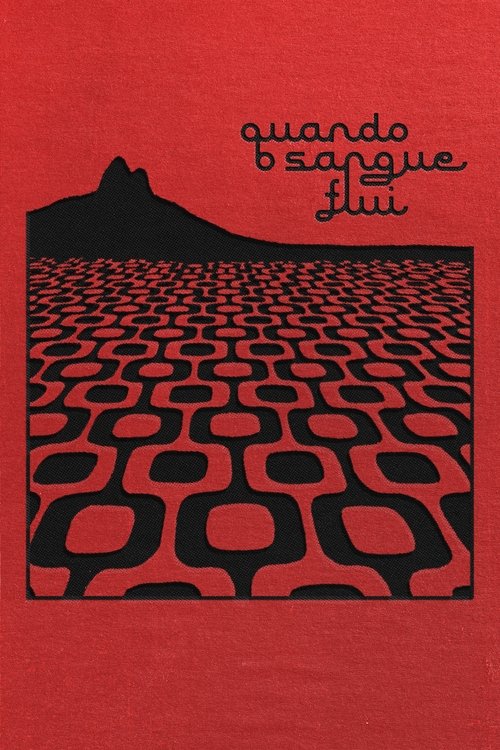
Quando o Sangue Flui
In the heart of Ipanema, in Rio de Janeiro's vibrant South Zone, lives a couple of vampires: Monique (Marina Lessa Trindade) and Claudie (Kauã Rodriguez). Monique is a talented, impatient, outspoken poet, a cannibal for love. Claudie, an elegant writer and entrepreneur, is a refined gentleman and a sommelier of red liquids in his spare time. Together, they lure their victims through letters proposing sexual encounters-only to inevitably devour them. As they engage in a dangerous game of seduction and death, other characters weave into their story, adding new layers of complexity. Ana (Sofia Sthel), a typical Copacabana girl with intense energy and a love of literature, briefly visits the vampires. Raul (Aramis Trindade), a verbose street artist and messenger of the apocalypse, wanders through Ipanema proclaiming visions of the world's end. Paula (Maju Souza), a young student and poetry enthusiast, spends her days reading Leminski in the square and contemplating life. Everything changes when one of the letters-written under special circumstances-receives an unexpected reply from Júlio (Sergio Mascouto), a mysterious visitor fascinated by the idea of anthropophagy, who dreams of starring in an act of human devouring. When the Blood Flows is an independent Brazilian feature film, deeply influenced by Cinema Marginal and the works of Torquato Neto, Rogério Sganzerla, and Júpiter Maçã. Its narrative is permeated by the poetry of Paulo Leminski, bossa nova, the tropicalist movement, Oswald de Andrade's Anthropophagic Manifesto, and the vibrant chaos of Brazilian culture. Through macabre and poetic encounters, the film explores desire, identity, and the relentless search for transcendence within the urban chaos.
Quando o Sangue Flui
Comedy,Horror
Film Details
In the heart of Ipanema, in Rio de Janeiro's vibrant South Zone, lives a couple of vampires: Monique (Marina Lessa Trindade) and Claudie (Kauã Rodriguez). Monique is a talented, impatient, outspoken poet, a cannibal for love. Claudie, an elegant writer and entrepreneur, is a refined gentleman and a sommelier of red liquids in his spare time.
Together, they lure their victims through letters proposing sexual encounters-only to inevitably devour them. As they engage in a dangerous game of seduction and death, other characters weave into their story, adding new layers of complexity. Ana (Sofia Sthel), a typical Copacabana girl with intense energy and a love of literature, briefly visits the vampires.
Raul (Aramis Trindade), a verbose street artist and messenger of the apocalypse, wanders through Ipanema proclaiming visions of the world's end. Paula (Maju Souza), a young student and poetry enthusiast, spends her days reading Leminski in the square and contemplating life. Everything changes when one of the letters-written under special circumstances-receives an unexpected reply from Júlio (Sergio Mascouto), a mysterious visitor fascinated by the idea of anthropophagy, who dreams of starring in an act of human devouring.
When the Blood Flows is an independent Brazilian feature film, deeply influenced by Cinema Marginal and the works of Torquato Neto, Rogério Sganzerla, and Júpiter Maçã. Its narrative is permeated by the poetry of Paulo Leminski, bossa nova, the tropicalist movement, Oswald de Andrade's Anthropophagic Manifesto, and the vibrant chaos of Brazilian culture. Through macabre and poetic encounters, the film explores desire, identity, and the relentless search for transcendence within the urban chaos..