


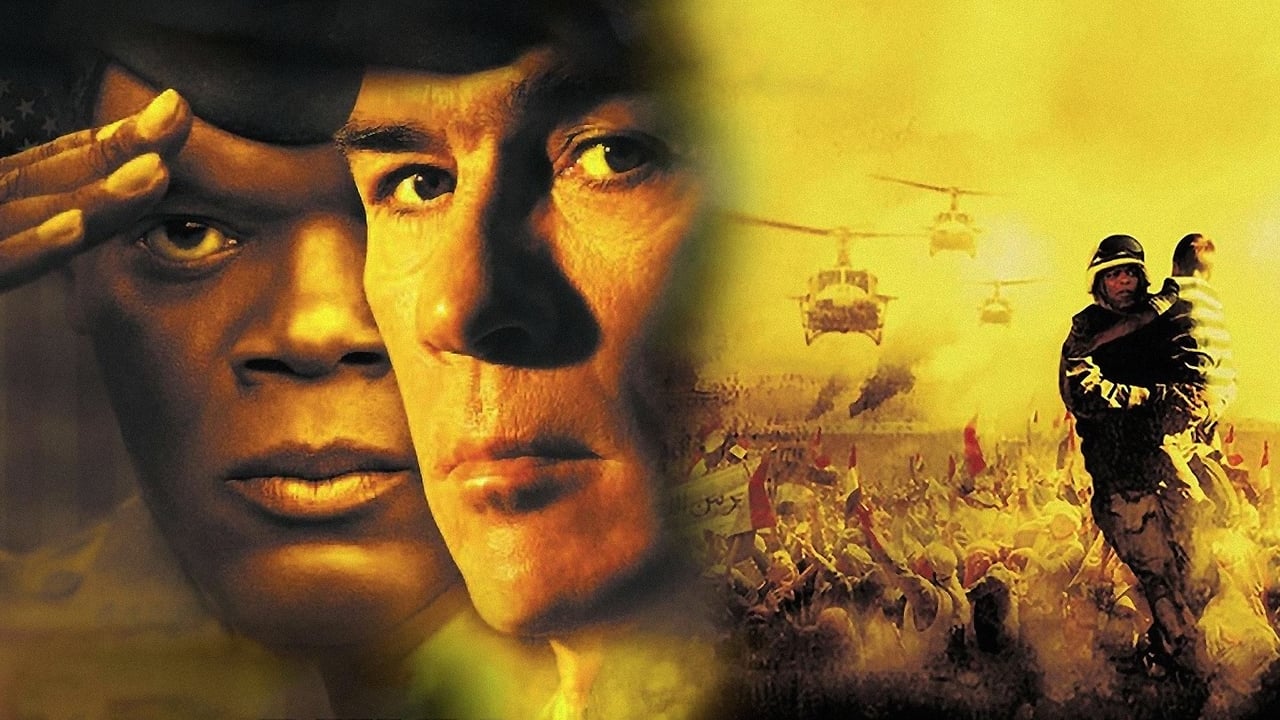
Rules of Engagement
The film opens with Operation Kingfisher, a disastrous American advance in the Vietnam War in 1968, that leaves U.S. Marine Lieutenant Hayes Hodges wounded in the knee and his men dead. Lt Childers wa…
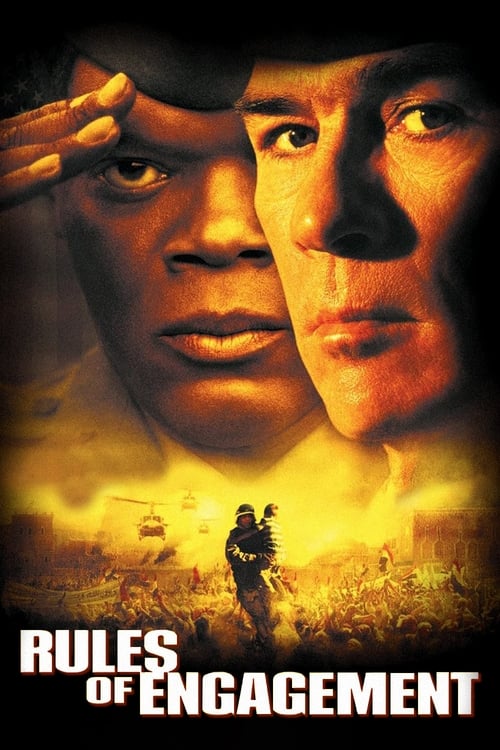
Rules of Engagement
The film opens with Operation Kingfisher, a disastrous American advance in the Vietnam War in 1968, that leaves U.S. Marine Lieutenant Hayes Hodges wounded in the knee and his men dead. Lt Childers was with Hodges when they were on a jungle patrol but had decided to diverge into 2 different routes before converging again closer to their target. On his route, Childers captures an NVA officer, when he hears Hodges' platoon coming under heavy enemy fire. Lt. Terry Childers (Samuel L. Jackson) executes an unarmed prisoner to intimidate an NVA officer into calling off the ambush of American marines, thereby saving the life of Lt. Hays Hodges (Tommy Lee Jones). After the ambush is called off, Childers allows the NVA officer to leave unharmed, just like he promised. Hodges sets off a flare, allowing Childers to reach his position and rescue him. In 1996, Hodges, now a colonel, is set to retire after 28 years as a JAG officer (and a total service of 32 years, which included 4 years of combat experience). At his Pre-retirement party at the Camp Lejeune Officers Club, he is honored by his old friend, Colonel Terry Childers, now the commanding officer of a Marine Expeditionary Unit. Before leaving Childers tells Hodges that the nature of war has changed drastically, as the enemy is no longer an a defined army and it is harder to tell whether one is losing or winning, as the war never ends. Childers and his unit are deployed to Southwest Asia as part of an Amphibious Readiness Group, called to evacuate the U.S. Ambassador to Yemen when a routine anti-American demonstration at the embassy begins smashing windows with rocks and using Molotov cocktails to try and smoke Ambassador Mourain out. Escorting the Ambassador and his family safely to a helicopter, Childers retrieves the embassy's American flag. Meanwhile, after the helicopter carrying the Ambassador and his family takes off before snipers can stop them from leaving Yemen, things turn for the worse when demonstrators begin shooting at the Marines, resulting in three fatalities. Childers has finally had enough bloodshed for this mission and orders his men to open fire on the crowd to prevent this gun violence from continuing any further, resulting in the deaths of 83 irregular Yemeni soldiers and civilians and the injuries of 100 more, including children, while the remaining Marines and embassy staff are saved. American diplomatic relations in the Middle East severely deteriorate after this, so U.S. National Security Advisor Bill Sokal pressures the military to court-martial Childers, hoping to salvage relations by placing all blame for the incident on the colonel. Childers finds Hodges, whose life he saved, is now serving in the JAG Division and asks him to be his defense attorney at the upcoming tribunal. Hodges is reluctant to accept, knowing that his record is less than impressive, and Childers needs a better lawyer. But Childers is adamant, because he would rather have an attorney who has served in combat before. Hodges rejects a plea deal from the prosecutor, Major Biggs (Guy Pearce), who is convinced of Childers' guilt but privately refuses to consider the death penalty. With little time to prepare a defense, Hodges goes to Yemen, where hostile witnesses and police claim that the Marines fired first on the unarmed crowd. Visiting the abandoned embassy and some of the wounded, he notices an undamaged security camera and scattered audio cassette tapes. Returning to the U.S., Hodges confronts Childers about the complete lack of evidence to support his version of events, resulting in a fistfight. Most of the evidence is stacked against Childers, especially because the National Security Advisor, Bill Sokal (Bruce Greenwood), is determined for him to be convicted, and at one point burns a videotape of security camera footage showing that the crowd, including an innocent-looking little girl, had indeed been in possession of weapons, justifying Childers' actions. He also blackmails the ambassador Childers rescued, Ambassador Mourain (Ben Kingsley), into lying on the stand and saying both that the crowd had been peaceful, and that Childers had been violent towards him and his family during the evacuation. Hodges meets with Mourain's wife (Anne Archer), who admits Childers acted valiantly but refuses to testify. Captain Lee (Blair Underwood), who hesitated to follow Childers' order, is unable to testify to having seen gunfire from the crowd. A Yemeni doctor testifies that the tapes Hodges found are propaganda inciting violence against Americans, but declares the protest was peaceful. However, at the trial, Hodges presents a shipping manifest proving that a tape from an undamaged camera which had been looking directly into the crowd, the tape Sokal had burned, has been delivered to Sokal's office, but has failed to show up, arguing that these tapes would have been used at the trial if they had shown the crowd was unarmed. Taking the stand, Childers explains that he was the only surviving Marine able to see the crowd was armed. On cross-examination, Biggs goads Childers into admitting that he ordered his men to open fire by shouting "waste the Motherf****s". Childers argues that he would not sacrifice the lives of his men to appease the likes of Biggs, to Hodges' dismay. Also, when the prosecution presents the Vietnamese Colonel, Colonel Cao (Baoan Coleman), who witnessed Childers execute a POW in Vietnam. During Hodges' cross-examination, Cao agrees that Childers took action to save American lives, and that if circumstances were reversed, Cao would have done the same. After the trial, Hodges confronts Sokal about the missing tape, vowing to uncover the truth. The film ends with Childers being found guilty of the minor charge of breach of the peace, but not guilty of the more serious charges of conduct unbecoming of an officer and murder, and a final title card reveals that no further charges were brought against him, and he retired honorably from the Marines. Sokal is found guilty of spoliation of evidence and forced to resign, while Mourain is charged with perjury. Biggs approaches Hodges about investigating Childers' actions in Vietnam, but Hodges declines to testify. Leaving the courthouse, Cao and Childers salute each other.
Rules of Engagement
Drama,Thriller,War
Film Details

The film opens with Operation Kingfisher, a disastrous American advance in the Vietnam War in 1968, that leaves U.S. Marine Lieutenant Hayes Hodges wounded in the knee and his men dead. Lt Childers was with Hodges when they were on a jungle patrol but had decided to diverge into 2 different routes before converging again closer to their target.
On his route, Childers captures an NVA officer, when he hears Hodges' platoon coming under heavy enemy fire. Lt. Terry Childers (Samuel L.
Jackson) executes an unarmed prisoner to intimidate an NVA officer into calling off the ambush of American marines, thereby saving the life of Lt. Hays Hodges (Tommy Lee Jones). After the ambush is called off, Childers allows the NVA officer to leave unharmed, just like he promised.
Hodges sets off a flare, allowing Childers to reach his position and rescue him. In 1996, Hodges, now a colonel, is set to retire after 28 years as a JAG officer (and a total service of 32 years, which included 4 years of combat experience). At his Pre-retirement party at the Camp Lejeune Officers Club, he is honored by his old friend, Colonel Terry Childers, now the commanding officer of a Marine Expeditionary Unit.
Before leaving Childers tells Hodges that the nature of war has changed drastically, as the enemy is no longer an a defined army and it is harder to tell whether one is losing or winning, as the war never ends. Childers and his unit are deployed to Southwest Asia as part of an Amphibious Readiness Group, called to evacuate the U.S. Ambassador to Yemen when a routine anti-American demonstration at the embassy begins smashing windows with rocks and using Molotov cocktails to try and smoke Ambassador Mourain out.
Escorting the Ambassador and his family safely to a helicopter, Childers retrieves the embassy's American flag. Meanwhile, after the helicopter carrying the Ambassador and his family takes off before snipers can stop them from leaving Yemen, things turn for the worse when demonstrators begin shooting at the Marines, resulting in three fatalities. Childers has finally had enough bloodshed for this mission and orders his men to open fire on the crowd to prevent this gun violence from continuing any further, resulting in the deaths of 83 irregular Yemeni soldiers and civilians and the injuries of 100 more, including children, while the remaining Marines and embassy staff are saved.
American diplomatic relations in the Middle East severely deteriorate after this, so U.S. National Security Advisor Bill Sokal pressures the military to court-martial Childers, hoping to salvage relations by placing all blame for the incident on the colonel. Childers finds Hodges, whose life he saved, is now serving in the JAG Division and asks him to be his defense attorney at the upcoming tribunal.
Hodges is reluctant to accept, knowing that his record is less than impressive, and Childers needs a better lawyer. But Childers is adamant, because he would rather have an attorney who has served in combat before. Hodges rejects a plea deal from the prosecutor, Major Biggs (Guy Pearce), who is convinced of Childers' guilt but privately refuses to consider the death penalty.
With little time to prepare a defense, Hodges goes to Yemen, where hostile witnesses and police claim that the Marines fired first on the unarmed crowd. Visiting the abandoned embassy and some of the wounded, he notices an undamaged security camera and scattered audio cassette tapes. Returning to the U.S., Hodges confronts Childers about the complete lack of evidence to support his version of events, resulting in a fistfight.
Most of the evidence is stacked against Childers, especially because the National Security Advisor, Bill Sokal (Bruce Greenwood), is determined for him to be convicted, and at one point burns a videotape of security camera footage showing that the crowd, including an innocent-looking little girl, had indeed been in possession of weapons, justifying Childers' actions. He also blackmails the ambassador Childers rescued, Ambassador Mourain (Ben Kingsley), into lying on the stand and saying both that the crowd had been peaceful, and that Childers had been violent towards him and his family during the evacuation. Hodges meets with Mourain's wife (Anne Archer), who admits Childers acted valiantly but refuses to testify.
Captain Lee (Blair Underwood), who hesitated to follow Childers' order, is unable to testify to having seen gunfire from the crowd. A Yemeni doctor testifies that the tapes Hodges found are propaganda inciting violence against Americans, but declares the protest was peaceful. However, at the trial, Hodges presents a shipping manifest proving that a tape from an undamaged camera which had been looking directly into the crowd, the tape Sokal had burned, has been delivered to Sokal's office, but has failed to show up, arguing that these tapes would have been used at the trial if they had shown the crowd was unarmed.
Taking the stand, Childers explains that he was the only surviving Marine able to see the crowd was armed. On cross-examination, Biggs goads Childers into admitting that he ordered his men to open fire by shouting "waste the Motherf****s". Childers argues that he would not sacrifice the lives of his men to appease the likes of Biggs, to Hodges' dismay.
Also, when the prosecution presents the Vietnamese Colonel, Colonel Cao (Baoan Coleman), who witnessed Childers execute a POW in Vietnam. During Hodges' cross-examination, Cao agrees that Childers took action to save American lives, and that if circumstances were reversed, Cao would have done the same. After the trial, Hodges confronts Sokal about the missing tape, vowing to uncover the truth.
The film ends with Childers being found guilty of the minor charge of breach of the peace, but not guilty of the more serious charges of conduct unbecoming of an officer and murder, and a final title card reveals that no further charges were brought against him, and he retired honorably from the Marines. Sokal is found guilty of spoliation of evidence and forced to resign, while Mourain is charged with perjury. Biggs approaches Hodges about investigating Childers' actions in Vietnam, but Hodges declines to testify.
Leaving the courthouse, Cao and Childers salute each other..