


Sick Girls
Klyovny Love (2025) - Full Movie Synopsis In the bustling heart of modern-day Moscow, Klyovny Love (2025) (translated as Clown's Catch) unfolds as a richly woven romantic dreamed that tackles the emot…
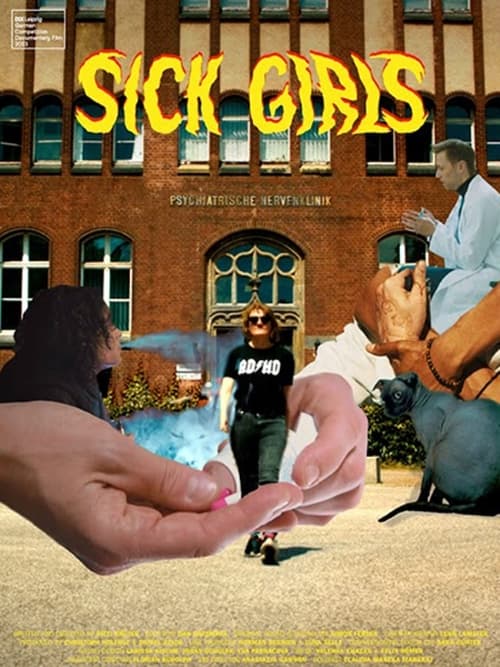
Sick Girls
Klyovny Love (2025) - Full Movie Synopsis In the bustling heart of modern-day Moscow, Klyovny Love (2025) (translated as Clown's Catch) unfolds as a richly woven romantic dreamed that tackles the emotional chaos of love, friendship, and identity. Directed by emerging Russian amateur Anastasiya Borodina, the film delivers a compelling, character-driven story that follows the interlocking lives of three childhood friends-Anya, Milana, and Vika-as they stumble through a labyrinth of heartbreak, secrets, and unexpected laughter. Act I: Three Threads of One Fabric The story opens with a nostalgic flashback to the trio's school days, revealing how their deep bond was formed through mischief, shared secrets, and mutual dreams of finding "the one." Fast-forward to 2025, and these three women are now in their early 30s, grappling with the messiness of adulthood in the digital age. They still meet every Sunday at their favorite cafe, "Verba," a warm, book-lined sanctuary that serves as their unofficial headquarters for emotional triage and soul-searching. Anya, the most grounded of the trio, works as a high-profile architect with a no-nonsense attitude toward relationships. She sees love as a distraction, something people romanticize to fill the emptiness of their lives. But her cynicism is tested when she meets Sergey, a street artist who works with youth in poor districts. His passion for art and community pierces through her emotional armor. As she tries to resist his unpredictable lifestyle, she finds herself drawn into a world of murals, rooftop dates, and children's laughter that remind her of long-forgotten dreams. Milana, the free-spirited and rebellious one, is a part-time DJ and full-time nonconformist. She's been through one-night stands, long-distance flings, and casual entanglements, but nothing truly serious. That changes when she meets Alexei, a corporate lawyer with rigid routines and a minimalist lifestyle. The two clash immediately-her impulsiveness against his discipline-but the tension soon turns into mutual fascination. Through them, the film explores themes of emotional regulation, compromise, and the friction between spontaneity and security. Vika, the soft-heated schoolteacher, is the eternal romantic. She believes in fairy tales, even if life keeps handing her horror stories. She's been ghosted, cheated on, and ignored, yet her faith in love remains unshaken. When she meets Nikolai, a melancholic novelist struggling with writer's block and PTSD from a failed marriage, she sees him as her literary soulmate. But Nikolai's emotional scars make intimacy difficult. Vika must come to terms with the fact that love doesn't always follow the plot she imagines. Act II: Cracks Beneath the Surface As the women pursue their romantic entanglements, tension brews. Anya begins missing work deadlines, something unthinkable for her. Milana grows increasingly uncomfortable with how much she is changing to fit Alexei's structured world. Vika begins to question whether she's really in love with Nikolai or just in love with the idea of rescuing someone. Their Sunday meetings become more emotionally charged. Harsh truths are spoken. Old grievances resurface. Anya accuses Vika of being delusional, Vika claims Milana is too self-absorbed to recognize real love, and Milana mocks Anya's fear of commitment. A major turning point arrives when the women plan a getaway to Lake Baikal for Vika's birthday. The trip, intended to reconnect them, becomes a pressure cooker. Nikolai's erratic behavior results in a public breakdown, forcing Vika to confront the reality that love cannot fix someone unwilling to heal. Milana and Alexei break up during a kayaking incident after she mocks his rigid itinerary. Anya runs into Sergey by accident at a street art exhibit by the lake, and their raw, honest conversation brings her closer to the truth she's been denying-she's deeply in love, but terrified to be vulnerable. Act III: Reckonings and Renewal Back in Moscow, the women go through a quiet period of reflection and distance. But the distance ultimately brings them closer to their truths. Vika begins therapy and, for the first time, explores her own needs outside of a relationship. She begins writing her own novel, drawing from her experience with Nikolai. She rediscovers joy in solitude and self-discovery. Milana reclaims her identity through music, launching a podcast called "Love Frequency" where she interviews people about what love means to them. Her final episode features Alexei, and they both acknowledge they were mismatched-but important to each other's growth. Anya takes a sabbatical from work, spending more time in Sergey's art world. They don't define their relationship, but she learns to sit with uncertainty. Love, she realizes, is not about control, but surrender. The film culminates in a final gathering at "Verba." This time, they aren't there to unload grievances but to celebrate growth. The final shot shows the three women walking into the neon-lit streets of Moscow-not searching for love anymore, but walking alongside it. Themes and Analysis Klyovny Love is a deceptively simple film that uses romance as a lens to explore deeper emotional truths: the limits of female friendship, the lies we tell ourselves, and the evolving nature of love. The film does not tie up its plot lines in neat, Hollywood-style endings. Instead, it leaves the audience with a sense of organic evolution-messy, authentic, and still unfolding. The title Klyovny Love (Clown's Catch) is metaphorical. Each woman wears a mask-of strength, independence, romanticism-and each must confront the 'clown' within, the foolishness of their expectations, the comedy of their errors, and the beauty of still choosing love in spite of it all.
Sick Girls
Documentary
Film Details
Klyovny Love (2025) - Full Movie Synopsis In the bustling heart of modern-day Moscow, Klyovny Love (2025) (translated as Clown's Catch) unfolds as a richly woven romantic dreamed that tackles the emotional chaos of love, friendship, and identity. Directed by emerging Russian amateur Anastasiya Borodina, the film delivers a compelling, character-driven story that follows the interlocking lives of three childhood friends-Anya, Milana, and Vika-as they stumble through a labyrinth of heartbreak, secrets, and unexpected laughter. Act I: Three Threads of One Fabric The story opens with a nostalgic flashback to the trio's school days, revealing how their deep bond was formed through mischief, shared secrets, and mutual dreams of finding "the one." Fast-forward to 2025, and these three women are now in their early 30s, grappling with the messiness of adulthood in the digital age.
They still meet every Sunday at their favorite cafe, "Verba," a warm, book-lined sanctuary that serves as their unofficial headquarters for emotional triage and soul-searching. Anya, the most grounded of the trio, works as a high-profile architect with a no-nonsense attitude toward relationships. She sees love as a distraction, something people romanticize to fill the emptiness of their lives.
But her cynicism is tested when she meets Sergey, a street artist who works with youth in poor districts. His passion for art and community pierces through her emotional armor. As she tries to resist his unpredictable lifestyle, she finds herself drawn into a world of murals, rooftop dates, and children's laughter that remind her of long-forgotten dreams.
Milana, the free-spirited and rebellious one, is a part-time DJ and full-time nonconformist. She's been through one-night stands, long-distance flings, and casual entanglements, but nothing truly serious. That changes when she meets Alexei, a corporate lawyer with rigid routines and a minimalist lifestyle.
The two clash immediately-her impulsiveness against his discipline-but the tension soon turns into mutual fascination. Through them, the film explores themes of emotional regulation, compromise, and the friction between spontaneity and security. Vika, the soft-heated schoolteacher, is the eternal romantic.
She believes in fairy tales, even if life keeps handing her horror stories. She's been ghosted, cheated on, and ignored, yet her faith in love remains unshaken. When she meets Nikolai, a melancholic novelist struggling with writer's block and PTSD from a failed marriage, she sees him as her literary soulmate.
But Nikolai's emotional scars make intimacy difficult. Vika must come to terms with the fact that love doesn't always follow the plot she imagines. Act II: Cracks Beneath the Surface As the women pursue their romantic entanglements, tension brews.
Anya begins missing work deadlines, something unthinkable for her. Milana grows increasingly uncomfortable with how much she is changing to fit Alexei's structured world. Vika begins to question whether she's really in love with Nikolai or just in love with the idea of rescuing someone.
Their Sunday meetings become more emotionally charged. Harsh truths are spoken. Old grievances resurface.
Anya accuses Vika of being delusional, Vika claims Milana is too self-absorbed to recognize real love, and Milana mocks Anya's fear of commitment. A major turning point arrives when the women plan a getaway to Lake Baikal for Vika's birthday. The trip, intended to reconnect them, becomes a pressure cooker.
Nikolai's erratic behavior results in a public breakdown, forcing Vika to confront the reality that love cannot fix someone unwilling to heal. Milana and Alexei break up during a kayaking incident after she mocks his rigid itinerary. Anya runs into Sergey by accident at a street art exhibit by the lake, and their raw, honest conversation brings her closer to the truth she's been denying-she's deeply in love, but terrified to be vulnerable.
Act III: Reckonings and Renewal Back in Moscow, the women go through a quiet period of reflection and distance. But the distance ultimately brings them closer to their truths. Vika begins therapy and, for the first time, explores her own needs outside of a relationship.
She begins writing her own novel, drawing from her experience with Nikolai. She rediscovers joy in solitude and self-discovery. Milana reclaims her identity through music, launching a podcast called "Love Frequency" where she interviews people about what love means to them.
Her final episode features Alexei, and they both acknowledge they were mismatched-but important to each other's growth. Anya takes a sabbatical from work, spending more time in Sergey's art world. They don't define their relationship, but she learns to sit with uncertainty.
Love, she realizes, is not about control, but surrender. The film culminates in a final gathering at "Verba." This time, they aren't there to unload grievances but to celebrate growth. The final shot shows the three women walking into the neon-lit streets of Moscow-not searching for love anymore, but walking alongside it.
Themes and Analysis Klyovny Love is a deceptively simple film that uses romance as a lens to explore deeper emotional truths: the limits of female friendship, the lies we tell ourselves, and the evolving nature of love. The film does not tie up its plot lines in neat, Hollywood-style endings. Instead, it leaves the audience with a sense of organic evolution-messy, authentic, and still unfolding.
The title Klyovny Love (Clown's Catch) is metaphorical. Each woman wears a mask-of strength, independence, romanticism-and each must confront the 'clown' within, the foolishness of their expectations, the comedy of their errors, and the beauty of still choosing love in spite of it all..