


The Conversation
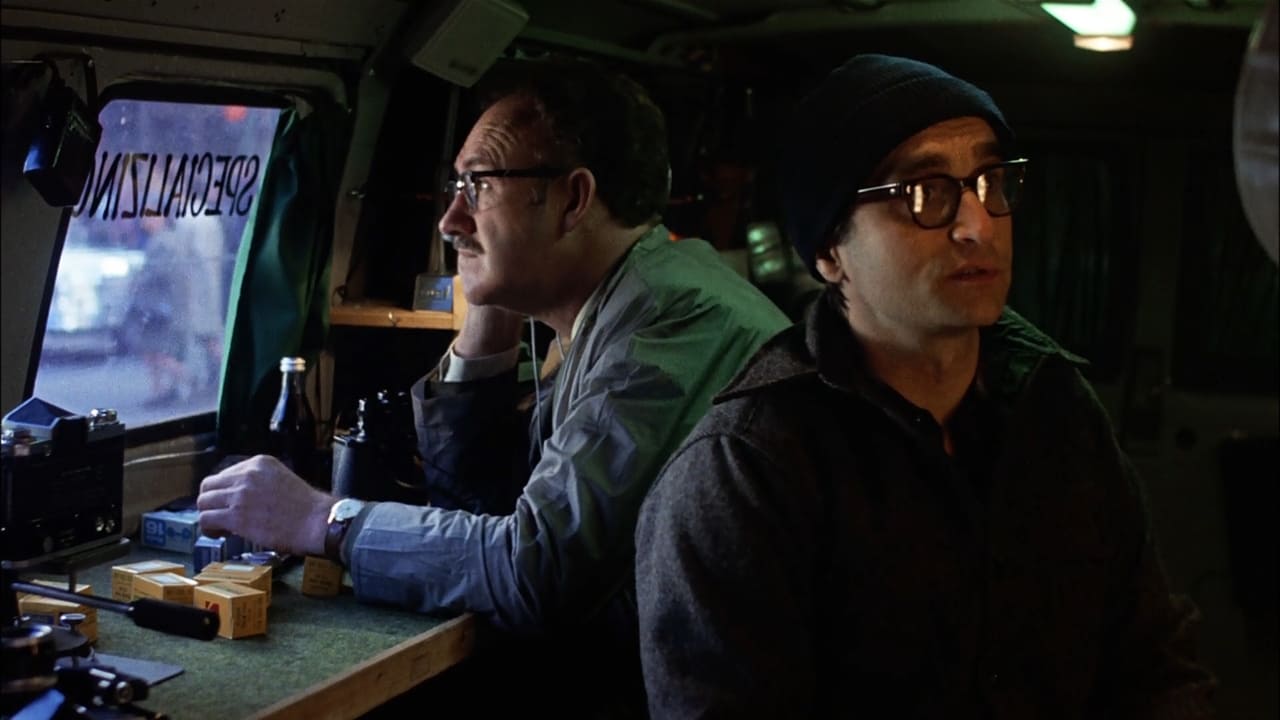
Harry Caul (Gene Hackman), a prominent private surveillance expert in San Francisco, has been hired by the CEO (Robert Duvall, known throughout simply as the director) of a large, unnamed company to f…
The Conversation
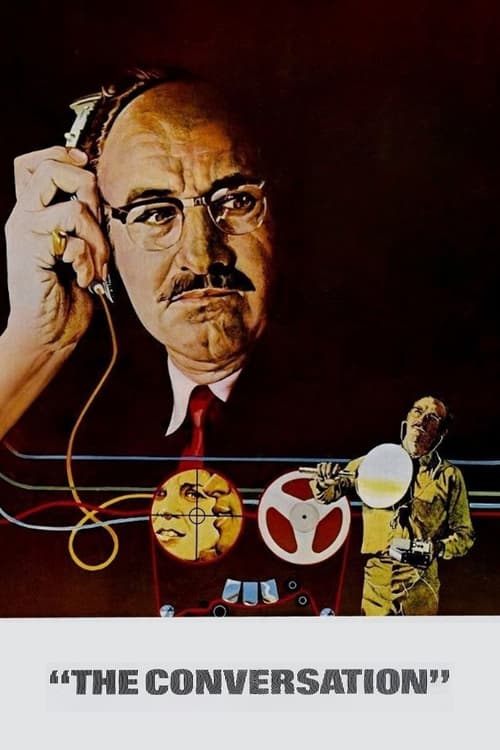
Harry Caul (Gene Hackman), a prominent private surveillance expert in San Francisco, has been hired by the CEO (Robert Duvall, known throughout simply as the director) of a large, unnamed company to follow and record a conversation between the director's wife, Ann (Cindy Williams) and her suspected lover, Mark (Frederic Forrest), who's a major executive at the company. Using three separate microphones and two cameras, Harry and associates follow the couple on a seemingly casual walk in Union Square, where the director suspects they go to talk without, they think, the possibility of being surveilled. Later, in his lab, Harry laboriously reconstructs their conversation, which clearly indicates the two are in a relationship, which seems about to be consummated again the following Sunday at 3 pm at a room in the Jack Tar Hotel. He obsessively homes in on a particularly hard-to-hear sentence Mark whispers in Ann's ear, and eventually, with the aid of a complex state-of-the-art electronic board of his own invention, pieces together what Mark whispered: "He'd kill us if he had the chance." Harry is secretive and paranoid (not totally without reason). He alienates his assistant, Stan (John Cazale), because Harry won't teach him more about audio surveillance nor share the details of his cases, and his girlfriend, Amy (Teri Garr), because he won't open up to her. A deeply religious man, his guilt over a previous case he conducted for the U.S. Justice Department that resulted in the death of a mafia accountant and his wife and child makes him fear that his work will again lead to the death of innocents, and he refuses to deliver the tape or its contents to the director's assistant, Martin Stett (a very young Harrison Ford). Amy breaks up with Harry, and he goes off to attend a surveillance convention at which he's a featured guest. There he spots Martin, whom he accuses of following him. Martin says he's just delivering a message: give up the tape. Harry discovers that Stan has overnight gone to work for Bernie Moran (Alan Garfield), a Detroit-based surveillance-device inventor looking to acquire the rights to Harry's celebrated electronic surveillance inventions. Bernie demonstrates a device he sells that turns any telephone into a live remote microphone. Harry pooh-poohs the device to Stan, and persuades him to come back and work for him. He invites Moran, Stan, and four other friends from the convention back to his lab for a party. Moran's sexy (but aging) product demonstrator Meredith (Elizabeth McRae) flirts brazenly with Harry, and in a tëte-a-tëte outside the lab he opens up to her about his troubles with Amy. Back in the lab, Stan gets Harry to explain his sophisticated surveillance method for the Union Square conversation. Harry is drunk and exuberant, but his mood is broken when Bernie reveals that he successfully planted a pen mike on Harry and plays back the very private conversation with Meredith. Harry is outraged and kicks everybody out. Meredith stays and sleeps with him on the small bed in the lab. Harry dreams that he's pursuing Ann through fog, telling her about how he nearly died from a childhood disease and warning her that her husband plans to kill her. "I'm not afraid of death," he tells her as she disappears in the mist, "but I am afraid of murder." When Harry awakens in the morning, he discovers that Meredith is gone, along with the composite tape, and the original individual tapes. He tries unsuccessfully to reach the director from a pay phone, then hurries home. Harry has told everyone that he doesn't have a telephone and is shocked when Martin calls him right back. Martin tells him that it was he who hired Meredith to take the tapes, and that he's delivered them to the director. Martin instructs him to come to the corporate office to pick up his $15,000 cash fee. When Harry complies, he finds the director listening to the tape in disbelief, which is turning, as he feared, quickly to anger. The upset director curtly dismisses Harry, telling. him to "please go count your money somewhere else." At the appointed time, Harry goes to the Jack Tar Hotel assignation Ann and Mark mentioned, takes an adjoining room, and inserts a microphone through a hole he drills in the bathroom wall to listen in. He hears the director yelling at Ann, followed by confusing shouting, and rushes to the balcony, where he sees bloody hands slap up against the glass partition. Terrified, he collapses in his room, and falls asleep, curled up like a fetus. (Some commentators wondering about his unusual last name note that the gray, semi-transparent raincoat Harry Caul sports throughout the movie eerily resembles the caul, a membrane that protects a baby in the womb.) Upon reviving, he breaks into the room Mark and Ann had rented. The room has been completely cleaned and restored to rentable status. In the bathroom, he inspects the covered-with-a-"sanitized"-label toilet, and hesitantly lifts the lid. It's immaculate inside, to his visceral relief. But when he flushes it, bloody water wells up and gushes surreally and relentlessly onto the floor. Harry goes to see the director but is forcibly ejected by guards before he can even get past the first floor. On the street, he spies a waiting limo which he expects to be occupied by the director. But it's Ann inside. He passes a newspaper box and sees that the headline story reveals the death of the director in a car accident. Suddenly he revisualizes the central line from the conversation, "He'd kill us if he had the chance," and realizes that because of his sympathy for Ann and Mark, he'd misapplied his modulator to emphasize the word "kill", and suppress the real emphasis that was on the word "us". The whisper wasn't about Mark's fears, but was instead a justification for the director's planned murder that they had been finalizing in the conversation. Ann now controls the company. Later, as Ann, Mark and Martin try to escape reporters pestering them about the director's death and the company's future, they spot Harry in the crowd. He runs. Back in his apartment, Harry sits and stews, and goes into his habitual form of meditation, playing a saxophone in accompaniment to a jazz record. His phone rings, but no one seems to be on the other end. He hangs up and resumes playing. It rings again; this time Martin is on the other end and warns him that he, Ann and Mark know that he has figured out what happened, and that they will be watching him. Martin then plays back a recording of Harry's record and sax playing from seconds before. Harry methodically tears apart his apartment looking for the bug, which he can't unearth (even in the phone, à la Bernie's device). He may be a widely celebrated surveillance expert, but he's got nothing on these guys. Exhausted, he resignedly goes back to playing his sax amidst the ruins of his apartment.
The Conversation
Drama,Mystery,Thriller
Film Details

Harry Caul (Gene Hackman), a prominent private surveillance expert in San Francisco, has been hired by the CEO (Robert Duvall, known throughout simply as the director) of a large, unnamed company to follow and record a conversation between the director's wife, Ann (Cindy Williams) and her suspected lover, Mark (Frederic Forrest), who's a major executive at the company. Using three separate microphones and two cameras, Harry and associates follow the couple on a seemingly casual walk in Union Square, where the director suspects they go to talk without, they think, the possibility of being surveilled. Later, in his lab, Harry laboriously reconstructs their conversation, which clearly indicates the two are in a relationship, which seems about to be consummated again the following Sunday at 3 pm at a room in the Jack Tar Hotel.
He obsessively homes in on a particularly hard-to-hear sentence Mark whispers in Ann's ear, and eventually, with the aid of a complex state-of-the-art electronic board of his own invention, pieces together what Mark whispered: "He'd kill us if he had the chance." Harry is secretive and paranoid (not totally without reason). He alienates his assistant, Stan (John Cazale), because Harry won't teach him more about audio surveillance nor share the details of his cases, and his girlfriend, Amy (Teri Garr), because he won't open up to her. A deeply religious man, his guilt over a previous case he conducted for the U.S.
Justice Department that resulted in the death of a mafia accountant and his wife and child makes him fear that his work will again lead to the death of innocents, and he refuses to deliver the tape or its contents to the director's assistant, Martin Stett (a very young Harrison Ford). Amy breaks up with Harry, and he goes off to attend a surveillance convention at which he's a featured guest. There he spots Martin, whom he accuses of following him.
Martin says he's just delivering a message: give up the tape. Harry discovers that Stan has overnight gone to work for Bernie Moran (Alan Garfield), a Detroit-based surveillance-device inventor looking to acquire the rights to Harry's celebrated electronic surveillance inventions. Bernie demonstrates a device he sells that turns any telephone into a live remote microphone.
Harry pooh-poohs the device to Stan, and persuades him to come back and work for him. He invites Moran, Stan, and four other friends from the convention back to his lab for a party. Moran's sexy (but aging) product demonstrator Meredith (Elizabeth McRae) flirts brazenly with Harry, and in a tëte-a-tëte outside the lab he opens up to her about his troubles with Amy.
Back in the lab, Stan gets Harry to explain his sophisticated surveillance method for the Union Square conversation. Harry is drunk and exuberant, but his mood is broken when Bernie reveals that he successfully planted a pen mike on Harry and plays back the very private conversation with Meredith. Harry is outraged and kicks everybody out.
Meredith stays and sleeps with him on the small bed in the lab. Harry dreams that he's pursuing Ann through fog, telling her about how he nearly died from a childhood disease and warning her that her husband plans to kill her. "I'm not afraid of death," he tells her as she disappears in the mist, "but I am afraid of murder." When Harry awakens in the morning, he discovers that Meredith is gone, along with the composite tape, and the original individual tapes.
He tries unsuccessfully to reach the director from a pay phone, then hurries home. Harry has told everyone that he doesn't have a telephone and is shocked when Martin calls him right back. Martin tells him that it was he who hired Meredith to take the tapes, and that he's delivered them to the director.
Martin instructs him to come to the corporate office to pick up his $15,000 cash fee. When Harry complies, he finds the director listening to the tape in disbelief, which is turning, as he feared, quickly to anger. The upset director curtly dismisses Harry, telling.
him to "please go count your money somewhere else." At the appointed time, Harry goes to the Jack Tar Hotel assignation Ann and Mark mentioned, takes an adjoining room, and inserts a microphone through a hole he drills in the bathroom wall to listen in. He hears the director yelling at Ann, followed by confusing shouting, and rushes to the balcony, where he sees bloody hands slap up against the glass partition. Terrified, he collapses in his room, and falls asleep, curled up like a fetus.
(Some commentators wondering about his unusual last name note that the gray, semi-transparent raincoat Harry Caul sports throughout the movie eerily resembles the caul, a membrane that protects a baby in the womb.) Upon reviving, he breaks into the room Mark and Ann had rented. The room has been completely cleaned and restored to rentable status. In the bathroom, he inspects the covered-with-a-"sanitized"-label toilet, and hesitantly lifts the lid.
It's immaculate inside, to his visceral relief. But when he flushes it, bloody water wells up and gushes surreally and relentlessly onto the floor. Harry goes to see the director but is forcibly ejected by guards before he can even get past the first floor.
On the street, he spies a waiting limo which he expects to be occupied by the director. But it's Ann inside. He passes a newspaper box and sees that the headline story reveals the death of the director in a car accident.
Suddenly he revisualizes the central line from the conversation, "He'd kill us if he had the chance," and realizes that because of his sympathy for Ann and Mark, he'd misapplied his modulator to emphasize the word "kill", and suppress the real emphasis that was on the word "us". The whisper wasn't about Mark's fears, but was instead a justification for the director's planned murder that they had been finalizing in the conversation. Ann now controls the company.
Later, as Ann, Mark and Martin try to escape reporters pestering them about the director's death and the company's future, they spot Harry in the crowd. He runs. Back in his apartment, Harry sits and stews, and goes into his habitual form of meditation, playing a saxophone in accompaniment to a jazz record.
His phone rings, but no one seems to be on the other end. He hangs up and resumes playing. It rings again; this time Martin is on the other end and warns him that he, Ann and Mark know that he has figured out what happened, and that they will be watching him.
Martin then plays back a recording of Harry's record and sax playing from seconds before. Harry methodically tears apart his apartment looking for the bug, which he can't unearth (even in the phone, à la Bernie's device). He may be a widely celebrated surveillance expert, but he's got nothing on these guys.
Exhausted, he resignedly goes back to playing his sax amidst the ruins of his apartment..