


The Dig
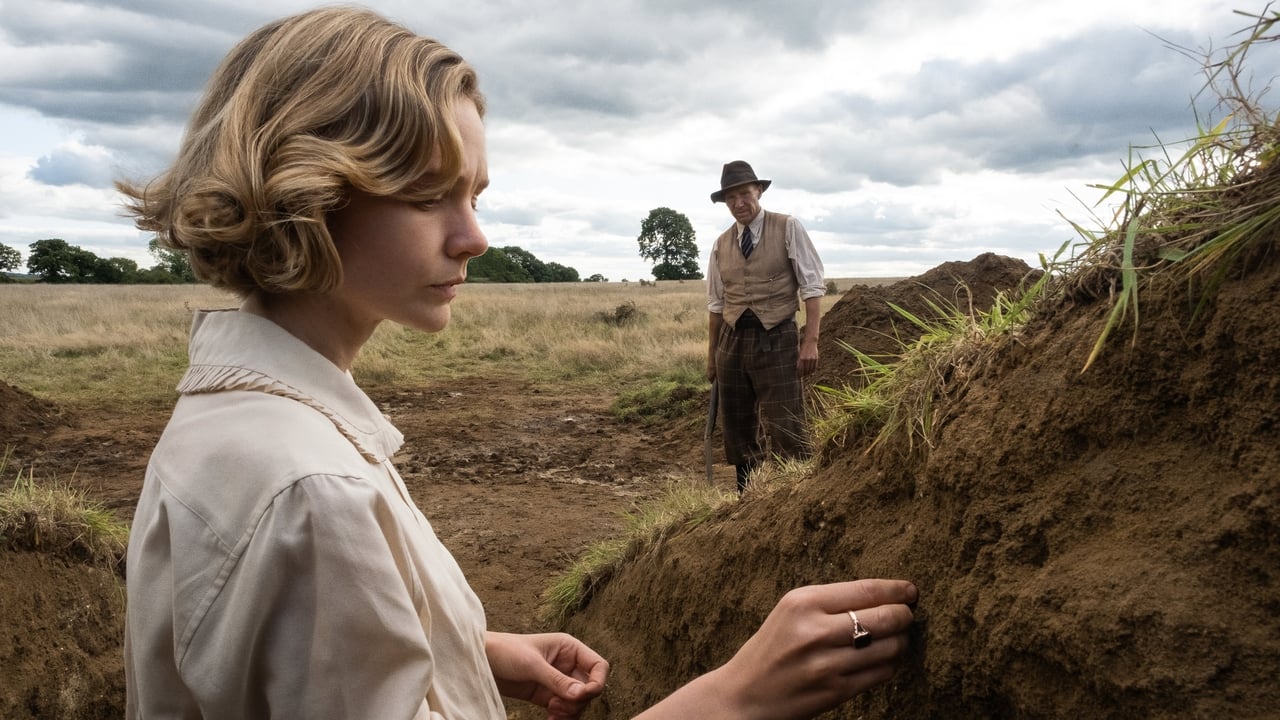
In 1939, Suffolk landowner Edith Pretty (Carey Mulligan) hires local self-taught archaeologist-excavator Basil Brown (Ralph Fiennes) to tackle the large burial mounds at her rural estate in Sutton Hoo…

The Dig
In 1939, Suffolk landowner Edith Pretty (Carey Mulligan) hires local self-taught archaeologist-excavator Basil Brown (Ralph Fiennes) to tackle the large burial mounds at her rural estate in Sutton Hoo near Woodbridge. The British museum ignored her request to study the site since they were busy excavating a Roman villa, and they also warned Edith against hiring Brown as Brown had a reputation of being a difficult person to work with. Brown had a fascination with the burial mounds and knows that even Henry VIII came to the site for a dig, although there is no record of what he found. The field is full of rabbits, who create burrows and that is always bad for excavations. Brown learns that Edith was also interested in Archeology since childhood and the burial mounds are a passion of hers. Edith's husband had passed away and it was indicated that he also served in the armed forces. Edith had constructed his grave on the estate grounds. At first, Edith offers the same money Brown received from the Ipswich Museum, the agricultural wage of 1 pounds 15 shillings and 6 pence a week, but he says it is inadequate. So, she ups her offer by 12% to 2 pounds a week (approximately 120 pounds in 2020), which he accepts. Brown had to cycle in everyday from his house, which was far away, and is given lodgings by Edith with Mr Lyons, her driver and Mrs. Lyons, her cook. Brown gets 2 helpers. Brown's former employers (from the British museum) try unsuccessfully to persuade Brown to work on a Roman villa they deem more important. They ignore Brown, who left school aged 12, when he suggests the mounds could be Anglo-Saxon rather than the more common Viking era. Brown had found a piece of wood inside the mound, which had been compacted to sand and that indicated that it was much older than the Viking era. James Reid Moir the museum archaeologist even threatens Brown that he would receive no further employment from the museum, if he continues to defy it. Working with assistants from Pretty's estate, Brown slowly excavates the more promising of the mounds. One day the trench collapses on him, but they dig him out in time and Brown survives. Meanwhile, he spends more time with Edith, a widow, and her young son Robert (Archie Barnes) finding common interest in archaeology and astronomy with them, and ignores daily letters from his wife, May (Monica Dolan). Edith struggles with her health as she starts to feel faint while walking and clutches at her heart. The local doctor believes it to be a case of bad food and warned to avoid stress. She supports his jobs as excavator despite the poor pay. As Brown spends more and more time at the site, he realizes the lay of the land and reason why some mounds are oval, and some are circular. He also factors in that the land has been under cultivation for at least 1000 years. As such, he selects a different mound to start excavating and Edith agrees. Mrs. Lyons tells Brown that Edith's husband, the Colonel, proposed to her when she was 17 years old. But she declined as she could not leave her father. So for 13 years, the Colonel waited and after Edith's father passed away, he proposed to her again. Edith and Colonel got married and the Colonel died just after Robert was born. Brown is astonished to uncover iron rivets from a ship, suggesting that it is the burial site of someone of tremendous distinction, such as a king. Prominent local archaeologist from the British Museum and Brown's former employer, James Reid Moir attempts to join the dig but is rebuffed. Edith instead hires her cousin Rory Lomax (Johnny Flynn) to join the project. Meanwhile Brown struggles alone to protect the wooden ship that has been partially uncovered in the dig. He has to protect it from the elements, while continuing the dig to uncover the whole of it, without destroying it. Meanwhile Edith travels to London for an ECG and finds that her heart valves are damaged due to a fever in her childhood. She is not likely to survive much longer. News of the discovery soon spreads, and Cambridge archaeologist Charles Phillips (Ken Stott) arrives, declares the site to be of national importance, and takes over the dig by order of the Office of Works. Brown finds a burial chamber inside the ship. Edith has no option but to comply. As World War II approaches, Philips brings in a large team, including Peggy Piggott (Lily James), who uncovers proof that it is Anglo-Saxon in origin. Brown is demoted to only keep the site in order. Brown decides to leave the site and goes back home. He is also very worried that he would get no credit for the find. But Robert follows him home and urges him to come back. Edith intervenes and tells Phillips that its snobbery when Phillips won't let Brown on the site as he is not "qualified" and he resumes digging. Brown discovers a Merovingian Tremissis, a small gold coin of Late Antiquity, and Philips declares the site to be of major historical significance. Philips wants to send all the artifacts to the British Museum, but Edith, concerned about war raids in London, asserts her rights. An inquest finding confirms that she is the owner of the ship and its priceless treasure trove of grave goods, but she despairs as her health continues to decline. Peggy, neglected by her husband Stuart (Ben Chaplin), begins a romance with Rory, but he is soon called up by the Royal Air Force. Peggy breaks up with Stuart. Edith decides to donate the Sutton Hoo treasure to the British Museum, requesting that Brown be given recognition for his work. Brown and his co-workers replace the earth over the ship to preserve it. Edith died in 1942. The treasure was hidden in the London Underground during the war and first exhibited, without any mention of Basil Brown, nine years after Edith's death. Only recently was Brown given full credit for his contribution and his name is now displayed permanently alongside Pretty's at the British Museum.
The Dig
Biography,Drama,History
Film Details

In 1939, Suffolk landowner Edith Pretty (Carey Mulligan) hires local self-taught archaeologist-excavator Basil Brown (Ralph Fiennes) to tackle the large burial mounds at her rural estate in Sutton Hoo near Woodbridge. The British museum ignored her request to study the site since they were busy excavating a Roman villa, and they also warned Edith against hiring Brown as Brown had a reputation of being a difficult person to work with. Brown had a fascination with the burial mounds and knows that even Henry VIII came to the site for a dig, although there is no record of what he found.
The field is full of rabbits, who create burrows and that is always bad for excavations. Brown learns that Edith was also interested in Archeology since childhood and the burial mounds are a passion of hers. Edith's husband had passed away and it was indicated that he also served in the armed forces.
Edith had constructed his grave on the estate grounds. At first, Edith offers the same money Brown received from the Ipswich Museum, the agricultural wage of 1 pounds 15 shillings and 6 pence a week, but he says it is inadequate. So, she ups her offer by 12% to 2 pounds a week (approximately 120 pounds in 2020), which he accepts.
Brown had to cycle in everyday from his house, which was far away, and is given lodgings by Edith with Mr Lyons, her driver and Mrs. Lyons, her cook. Brown gets 2 helpers.
Brown's former employers (from the British museum) try unsuccessfully to persuade Brown to work on a Roman villa they deem more important. They ignore Brown, who left school aged 12, when he suggests the mounds could be Anglo-Saxon rather than the more common Viking era. Brown had found a piece of wood inside the mound, which had been compacted to sand and that indicated that it was much older than the Viking era.
James Reid Moir the museum archaeologist even threatens Brown that he would receive no further employment from the museum, if he continues to defy it. Working with assistants from Pretty's estate, Brown slowly excavates the more promising of the mounds. One day the trench collapses on him, but they dig him out in time and Brown survives.
Meanwhile, he spends more time with Edith, a widow, and her young son Robert (Archie Barnes) finding common interest in archaeology and astronomy with them, and ignores daily letters from his wife, May (Monica Dolan). Edith struggles with her health as she starts to feel faint while walking and clutches at her heart. The local doctor believes it to be a case of bad food and warned to avoid stress.
She supports his jobs as excavator despite the poor pay. As Brown spends more and more time at the site, he realizes the lay of the land and reason why some mounds are oval, and some are circular. He also factors in that the land has been under cultivation for at least 1000 years.
As such, he selects a different mound to start excavating and Edith agrees. Mrs. Lyons tells Brown that Edith's husband, the Colonel, proposed to her when she was 17 years old.
But she declined as she could not leave her father. So for 13 years, the Colonel waited and after Edith's father passed away, he proposed to her again. Edith and Colonel got married and the Colonel died just after Robert was born.
Brown is astonished to uncover iron rivets from a ship, suggesting that it is the burial site of someone of tremendous distinction, such as a king. Prominent local archaeologist from the British Museum and Brown's former employer, James Reid Moir attempts to join the dig but is rebuffed. Edith instead hires her cousin Rory Lomax (Johnny Flynn) to join the project.
Meanwhile Brown struggles alone to protect the wooden ship that has been partially uncovered in the dig. He has to protect it from the elements, while continuing the dig to uncover the whole of it, without destroying it. Meanwhile Edith travels to London for an ECG and finds that her heart valves are damaged due to a fever in her childhood.
She is not likely to survive much longer. News of the discovery soon spreads, and Cambridge archaeologist Charles Phillips (Ken Stott) arrives, declares the site to be of national importance, and takes over the dig by order of the Office of Works. Brown finds a burial chamber inside the ship.
Edith has no option but to comply. As World War II approaches, Philips brings in a large team, including Peggy Piggott (Lily James), who uncovers proof that it is Anglo-Saxon in origin. Brown is demoted to only keep the site in order.
Brown decides to leave the site and goes back home. He is also very worried that he would get no credit for the find. But Robert follows him home and urges him to come back.
Edith intervenes and tells Phillips that its snobbery when Phillips won't let Brown on the site as he is not "qualified" and he resumes digging. Brown discovers a Merovingian Tremissis, a small gold coin of Late Antiquity, and Philips declares the site to be of major historical significance. Philips wants to send all the artifacts to the British Museum, but Edith, concerned about war raids in London, asserts her rights.
An inquest finding confirms that she is the owner of the ship and its priceless treasure trove of grave goods, but she despairs as her health continues to decline. Peggy, neglected by her husband Stuart (Ben Chaplin), begins a romance with Rory, but he is soon called up by the Royal Air Force. Peggy breaks up with Stuart.
Edith decides to donate the Sutton Hoo treasure to the British Museum, requesting that Brown be given recognition for his work. Brown and his co-workers replace the earth over the ship to preserve it. Edith died in 1942.
The treasure was hidden in the London Underground during the war and first exhibited, without any mention of Basil Brown, nine years after Edith's death. Only recently was Brown given full credit for his contribution and his name is now displayed permanently alongside Pretty's at the British Museum..