


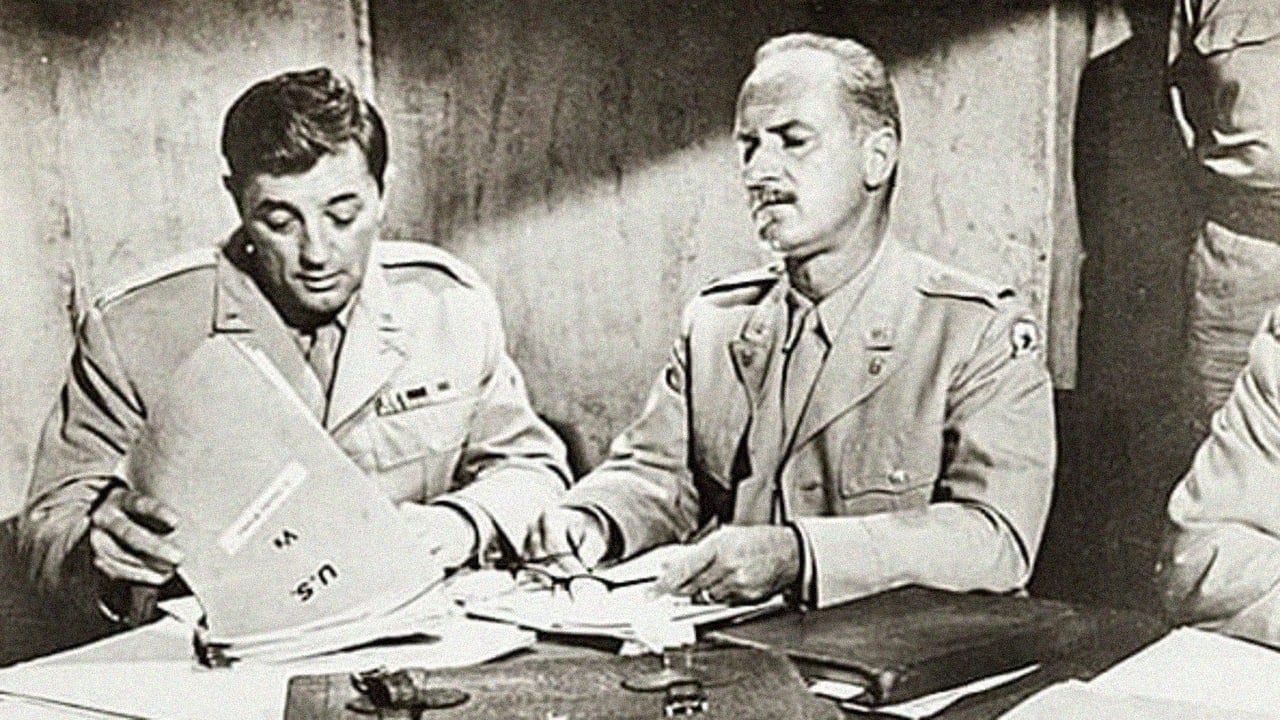
The Winston Affair
The opening scene shows USA Lt. Winston (Keenan Wynn) Keenan Wynn in a WWII military camp in India marching into a British sergeant's tent and killing him, in front of many witnesses. No reason for th…
The Winston Affair
The opening scene shows USA Lt. Winston (Keenan Wynn) Keenan Wynn in a WWII military camp in India marching into a British sergeant's tent and killing him, in front of many witnesses. No reason for this is shown at this point. After credits, Lt. Cnl. Barney Adams (Robert Mitchum) Robert Mitchum, a somehow rusty lawyer, arrives by flight to India and witnesses an example of tensions between American and British soldiers. Adams meets Gen. Kempton (Barry Sullivan) Barry Sullivan, who explains that the killing is causing friction between both armies, which should be strong allies. Adams learns that Winston's brother-in-law is a congressman who has been rejecting low ranking defense counsels for his brother, but finally accepted Mitchum be appointed for the court martial of Winston. The General basically tells Mitchum that Winston is guilty and will be executed for the benefit of US-UK relations, so the defense of Winston in court is merely a formality. At first, Adams is willing to just go through the motions --especially when in his first interview he finds Winston to be a white supremacist jerk-- and he says as much to the two junior attorneys appointed to assist him. To "go through the motions", Adams visits the hospital where Winston was briefly sent for evaluation of his state of mind. The head of the hospital, Col. Burton (Alexander Knox) Alexander Knox hurriedly claims not to know which physician had examined Winston, just that he remembers that Winston had been found sane and returned to prison. However, before leaving the hospital, Adams is discretely stopped by the attractive nurse Davray (France Nuyen) France Nuyen who tells him that Burton knows only too well that the capable staff psychiatrist Kaufman (Sam Wanamaker) Sam Wanamaker examined Winston and found him mentally deranged, as Kaufman detailed in a report that was rejected by Burton. Later, Adams meets a reluctant Kaufman and asks him for his report, but it seems the doctor kept no copies. At that moment Burton intrudes in an adversarial way, which increases Adams' suspicions. He decides to summon Kaufman as witness for the defense, but he learns that, after the argument with Burton, Gen. Kempton had sent Kaufman to a remote outpost, clearly to make him unavailable for the defense. This leads to a rough exchange between Kempton and Adams. Confidentially the nurse gives Adams an unsigned carbon copy of Kaufman's report. An intimate relationship develops between the two. Adams realizes that Winston is most probably insane, and though he is aware that preventing Winston's execution might be a career suicide, his conscience tells him that executing a man with diminished capacity is wrong. The nurse, in spite of being half Chinese and Winston to be a despicable bigot, agrees that executing him would be a miscarriage of justice. Adams goes to the outpost of the killing, where his assistants interview the witnesses and where he meets the British officer in charge, Major Kensington (Trevor Howard) Trevor Howard, a psychiatrist who had observed Winston for a long time and who had equally concluded that he was in fact demented. During one of his interviews with Winston, mixed with stone silence and irrelevant ramblings, Adams learns the motive for the murder: Winston, a racist, couldn't tolerate the fact that the British soldier he killed was "defiling the white race" by consorting with women of another race, and bragging about it. Later, Adams furtively goes to the remote camp where Kaufman was sent and convinces him to go to Delhi and act as an expert witness for the defense. During the court martial Adams pays no attention to the witnesses of the shooting but submits Burton to a strong interrogatory where it is shown that Burton maneuvered to manufacturing the report where Winston was said to be sane. The news arrive that Adams star witness, Kaufman, had died on a car accident in the way to the court. At the last minute, Kensington appears in Delhi so Adams calls him as witness. Kensington's impressive academic credentials, detailed diagnostic and assured testimony virtually establishes, in the eyes of journalists and everybody else, the mental disease of Winston. To further add to this conclusion, Winston, who refuses to be declared insane, has a revealingly violent breakdown in court. It is not shown in the film but it is evident that Winston will be committed, not executed. For an unexplained reason Adams will not continue his relationship with the nurse, and leaves India after receiving an implicit threat, from the general, that due to this he will never go far in the military.
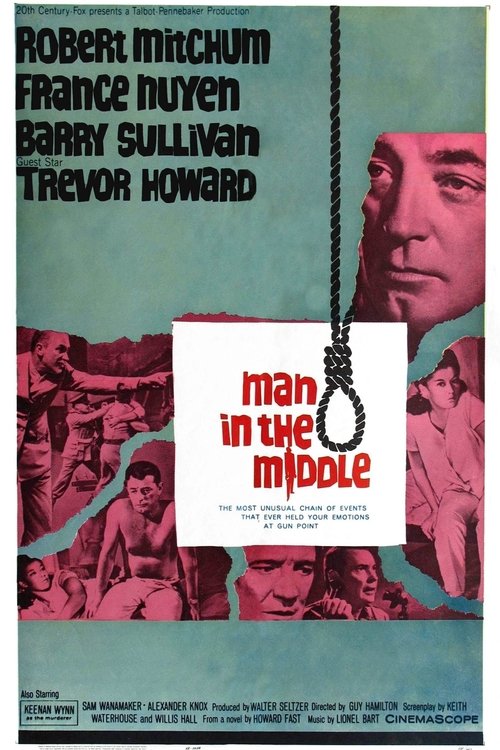
The Winston Affair
Drama,War
Film Details
The opening scene shows USA Lt. Winston (Keenan Wynn) Keenan Wynn in a WWII military camp in India marching into a British sergeant's tent and killing him, in front of many witnesses. No reason for this is shown at this point.
After credits, Lt. Cnl. Barney Adams (Robert Mitchum) Robert Mitchum, a somehow rusty lawyer, arrives by flight to India and witnesses an example of tensions between American and British soldiers.
Adams meets Gen. Kempton (Barry Sullivan) Barry Sullivan, who explains that the killing is causing friction between both armies, which should be strong allies. Adams learns that Winston's brother-in-law is a congressman who has been rejecting low ranking defense counsels for his brother, but finally accepted Mitchum be appointed for the court martial of Winston.
The General basically tells Mitchum that Winston is guilty and will be executed for the benefit of US-UK relations, so the defense of Winston in court is merely a formality. At first, Adams is willing to just go through the motions --especially when in his first interview he finds Winston to be a white supremacist jerk-- and he says as much to the two junior attorneys appointed to assist him. To "go through the motions", Adams visits the hospital where Winston was briefly sent for evaluation of his state of mind.
The head of the hospital, Col. Burton (Alexander Knox) Alexander Knox hurriedly claims not to know which physician had examined Winston, just that he remembers that Winston had been found sane and returned to prison. However, before leaving the hospital, Adams is discretely stopped by the attractive nurse Davray (France Nuyen) France Nuyen who tells him that Burton knows only too well that the capable staff psychiatrist Kaufman (Sam Wanamaker) Sam Wanamaker examined Winston and found him mentally deranged, as Kaufman detailed in a report that was rejected by Burton.
Later, Adams meets a reluctant Kaufman and asks him for his report, but it seems the doctor kept no copies. At that moment Burton intrudes in an adversarial way, which increases Adams' suspicions. He decides to summon Kaufman as witness for the defense, but he learns that, after the argument with Burton, Gen.
Kempton had sent Kaufman to a remote outpost, clearly to make him unavailable for the defense. This leads to a rough exchange between Kempton and Adams. Confidentially the nurse gives Adams an unsigned carbon copy of Kaufman's report.
An intimate relationship develops between the two. Adams realizes that Winston is most probably insane, and though he is aware that preventing Winston's execution might be a career suicide, his conscience tells him that executing a man with diminished capacity is wrong. The nurse, in spite of being half Chinese and Winston to be a despicable bigot, agrees that executing him would be a miscarriage of justice.
Adams goes to the outpost of the killing, where his assistants interview the witnesses and where he meets the British officer in charge, Major Kensington (Trevor Howard) Trevor Howard, a psychiatrist who had observed Winston for a long time and who had equally concluded that he was in fact demented. During one of his interviews with Winston, mixed with stone silence and irrelevant ramblings, Adams learns the motive for the murder: Winston, a racist, couldn't tolerate the fact that the British soldier he killed was "defiling the white race" by consorting with women of another race, and bragging about it. Later, Adams furtively goes to the remote camp where Kaufman was sent and convinces him to go to Delhi and act as an expert witness for the defense.
During the court martial Adams pays no attention to the witnesses of the shooting but submits Burton to a strong interrogatory where it is shown that Burton maneuvered to manufacturing the report where Winston was said to be sane. The news arrive that Adams star witness, Kaufman, had died on a car accident in the way to the court. At the last minute, Kensington appears in Delhi so Adams calls him as witness.
Kensington's impressive academic credentials, detailed diagnostic and assured testimony virtually establishes, in the eyes of journalists and everybody else, the mental disease of Winston. To further add to this conclusion, Winston, who refuses to be declared insane, has a revealingly violent breakdown in court. It is not shown in the film but it is evident that Winston will be committed, not executed.
For an unexplained reason Adams will not continue his relationship with the nurse, and leaves India after receiving an implicit threat, from the general, that due to this he will never go far in the military..