


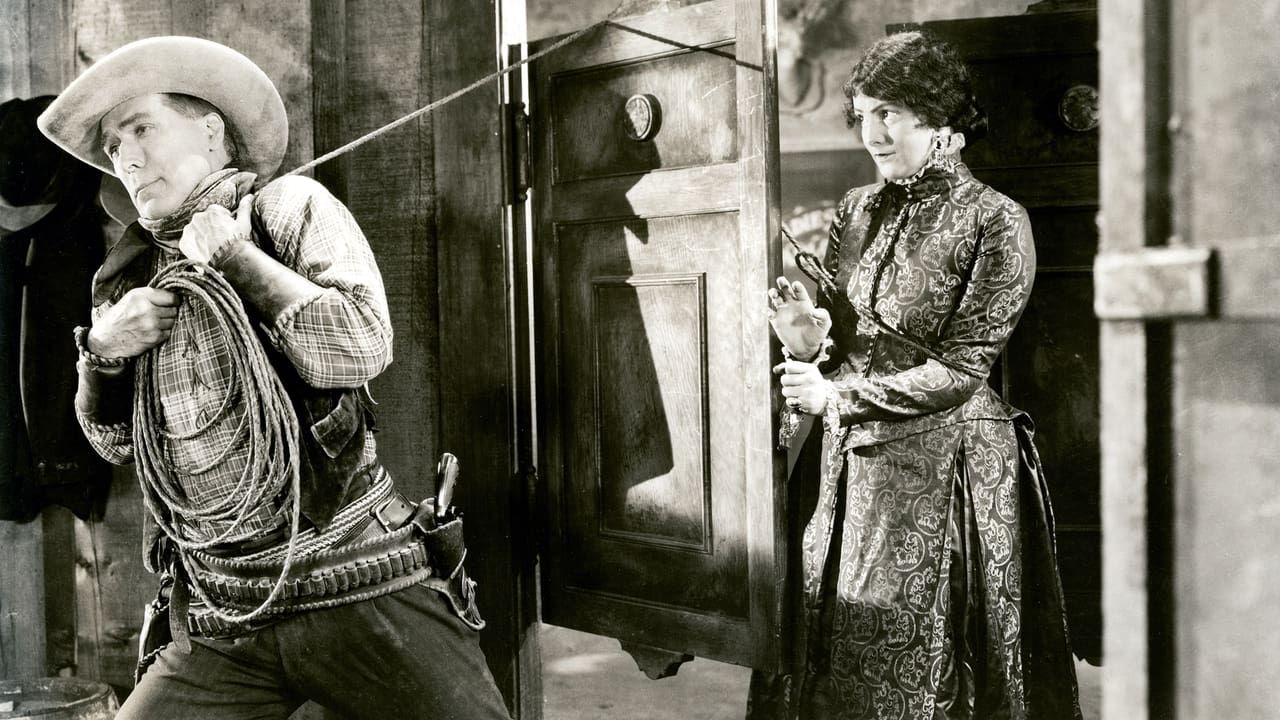
Tumbleweeds
The government will grant a fringe of terrain for the settlers who want to live and work there. The starting sign will be a gunshot which will initiate the run for the best fields and claims. In 1889…
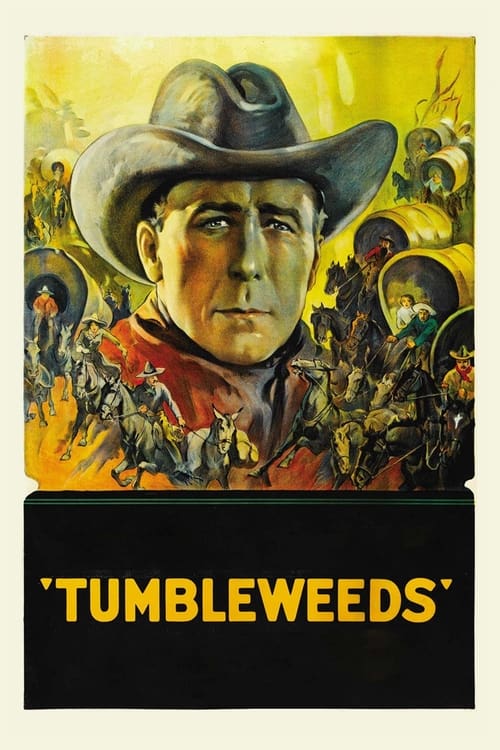
Tumbleweeds
The government will grant a fringe of terrain for the settlers who want to live and work there. The starting sign will be a gunshot which will initiate the run for the best fields and claims. In 1889 the Cherokee Strip is opened to homesteaders, and Don Carver, one of the self-styled "tumbleweeds" and range boss of the Box K Ranch, finds himself out of a job. He meets and falls in love with Molly Lassiter, who belongs to one of the many families of homesteaders who have gathered in Caldwell, Kansas, for the big land rush. Don decides to sign up for a piece of land and hopes to claim the site of the Box K ranch house, which controls the water for the strip. Molly's evil half-brother, Noll, and Bill Freel, Don's rival for Molly's hand, conspire to have Don arrested as a "sooner" when he tries to round up some stray cattle in the Strip. Don breaks out of the stockade to join the rush, but he finds Noll and Freel already at the ranch house when he arrives. Don evicts them, and troopers arrive and arrest the two as "sooners." Molly finally consents to be Don's wife. 1939 version reissued with sound: In sponsoring the revival of what perhaps was the greatest picture of one of the greatest western stars, Willim S. Hart of fond but not forgotten memory, Astor pictures has avowed a "desire not only to bring Bill Hart back to his old loyal fans, but to present him for the first time to a new generation as one of the greatest and most beloved film actors." The new version of the 1925 production carries a modern note in a prologue of eight minutes during which sequence Mr. Hart comes down from the hills in his California ranch home to speak a word of welcome. Sound effects and a rousing musical background lend atmospheric assistance. Despite the technical advances and changes in lighting, directing, acting and editing, the revival saga sports scenes depicting the opening of the Cherokee Strip to land settlement, material made memorable more recently in "Cimarron," that pack scope of magnitude, drama and thrills equal to any present day production output. For those whose memories may be a bit hazy as to story detail and for those to whom the plot is something new, the narrative is located in the Cherokee Land Strip between the states of Oklahoma and Kansas around the time of 1889. Mr. Hart plays "Don Carver," a character similar to the prairie tumbleweeds. With the new grant arrangement, he with the other cattle grazers finds himself without a job. At the homesteaders' settlement, he meets "Molly Lassiter" and through his attachment for the girl decides to enter the land sweepstakes. "Molly's" half brother, "Noll," and his equally villainous confederate, "Freel," frame "Carver." Then comes swift action. Comedy and a good grade of it is supplied by "Kentucky Rose." —Motion Picture Herald It's 1889 and the Cherokee Strip is about to be opened to settlers. After cowboy Dan Carver helps move the Box K cattle off the strip he meets Molly Lassiter. Attracted to her he decides to try to file on the Box K ranch for her. But when he returns to the strip to check for stray cattle, he is arrested as a Sooner and is now unable to participate in the land rush. —Maurice VanAuken <mvanauken@a1access.net>
Tumbleweeds
Drama,Western
Film Details
The government will grant a fringe of terrain for the settlers who want to live and work there. The starting sign will be a gunshot which will initiate the run for the best fields and claims. In 1889 the Cherokee Strip is opened to homesteaders, and Don Carver, one of the self-styled "tumbleweeds" and range boss of the Box K Ranch, finds himself out of a job.
He meets and falls in love with Molly Lassiter, who belongs to one of the many families of homesteaders who have gathered in Caldwell, Kansas, for the big land rush. Don decides to sign up for a piece of land and hopes to claim the site of the Box K ranch house, which controls the water for the strip. Molly's evil half-brother, Noll, and Bill Freel, Don's rival for Molly's hand, conspire to have Don arrested as a "sooner" when he tries to round up some stray cattle in the Strip.
Don breaks out of the stockade to join the rush, but he finds Noll and Freel already at the ranch house when he arrives. Don evicts them, and troopers arrive and arrest the two as "sooners." Molly finally consents to be Don's wife. 1939 version reissued with sound: In sponsoring the revival of what perhaps was the greatest picture of one of the greatest western stars, Willim S.
Hart of fond but not forgotten memory, Astor pictures has avowed a "desire not only to bring Bill Hart back to his old loyal fans, but to present him for the first time to a new generation as one of the greatest and most beloved film actors." The new version of the 1925 production carries a modern note in a prologue of eight minutes during which sequence Mr. Hart comes down from the hills in his California ranch home to speak a word of welcome. Sound effects and a rousing musical background lend atmospheric assistance.
Despite the technical advances and changes in lighting, directing, acting and editing, the revival saga sports scenes depicting the opening of the Cherokee Strip to land settlement, material made memorable more recently in "Cimarron," that pack scope of magnitude, drama and thrills equal to any present day production output. For those whose memories may be a bit hazy as to story detail and for those to whom the plot is something new, the narrative is located in the Cherokee Land Strip between the states of Oklahoma and Kansas around the time of 1889. Mr.
Hart plays "Don Carver," a character similar to the prairie tumbleweeds. With the new grant arrangement, he with the other cattle grazers finds himself without a job. At the homesteaders' settlement, he meets "Molly Lassiter" and through his attachment for the girl decides to enter the land sweepstakes.
"Molly's" half brother, "Noll," and his equally villainous confederate, "Freel," frame "Carver." Then comes swift action. Comedy and a good grade of it is supplied by "Kentucky Rose." —Motion Picture Herald It's 1889 and the Cherokee Strip is about to be opened to settlers. After cowboy Dan Carver helps move the Box K cattle off the strip he meets Molly Lassiter.
Attracted to her he decides to try to file on the Box K ranch for her. But when he returns to the strip to check for stray cattle, he is arrested as a Sooner and is now unable to participate in the land rush. —Maurice VanAuken <mvanauken@a1access.net>.