


Z
During a speaking engagement coinciding with an appearance of the Bolshoi Ballet, pacifist Deputy Z., the target of a right-wing military conspiracy, is assassinated by homosexual reactionaries Vago a…
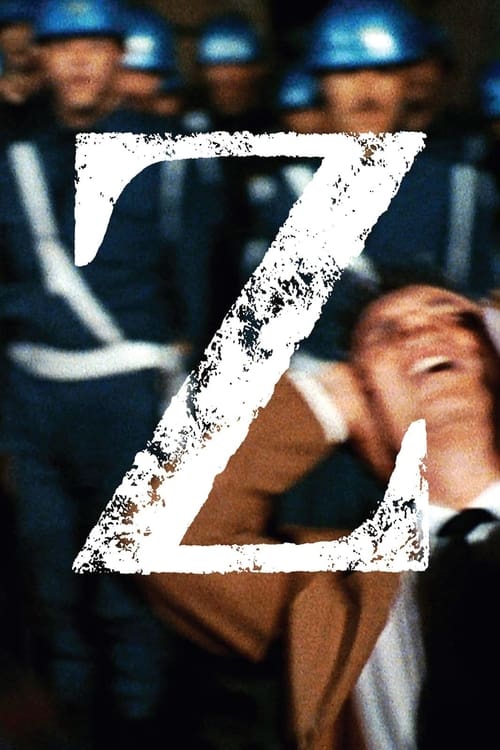
Z
During a speaking engagement coinciding with an appearance of the Bolshoi Ballet, pacifist Deputy Z., the target of a right-wing military conspiracy, is assassinated by homosexual reactionaries Vago and Yago, and Z.'s supporters are brutally beaten by thugs before indifferent police. When an autopsy discloses that Z. was not killed by a hit-and-run driver, but bludgeoned to death, the deputy's supporters demand an investigation. In response, seemingly apathetic local authorities appoint as investigating magistrate a career civil servant, who, to the surprise of all, proves to be incorruptible. In his investigation the magistrate is assisted by a fiercely independent journalist and by a courageous eyewitness, the casket-maker Nick. Although Nick is offered bribes by civil authorities, he refuses to change his story. Hospitalized as a result of an assault and reproached by his sister, Nick sticks to his story. As a result, the military conspiracy is exposed, Vago and Yago are convicted, and Z.'s party is victorious in the general election. High army officials, however, are given suspended sentences, and several months later the military accomplish a coup d'état, imprison dissidents, and interdict long hair, miniskirts, the Beatles, several major authors, references to Socrates' homosexuality, and the letter "Z," which in the ancient Greek means "he lives." This Academy Award winner is loosely based on the 1963 assassination of Greek left-wing activist Gregoris Lambrakis. A pulse-pounding political thriller, Greek expatriate director Costa-Gavras's Z was one of the cinematic sensations of the late sixties, and remains among the most vital dispatches from that hallowed era of filmmaking.
Z
Crime,Drama,Thriller
Film Details
During a speaking engagement coinciding with an appearance of the Bolshoi Ballet, pacifist Deputy Z., the target of a right-wing military conspiracy, is assassinated by homosexual reactionaries Vago and Yago, and Z.'s supporters are brutally beaten by thugs before indifferent police. When an autopsy discloses that Z. was not killed by a hit-and-run driver, but bludgeoned to death, the deputy's supporters demand an investigation.
In response, seemingly apathetic local authorities appoint as investigating magistrate a career civil servant, who, to the surprise of all, proves to be incorruptible. In his investigation the magistrate is assisted by a fiercely independent journalist and by a courageous eyewitness, the casket-maker Nick. Although Nick is offered bribes by civil authorities, he refuses to change his story.
Hospitalized as a result of an assault and reproached by his sister, Nick sticks to his story. As a result, the military conspiracy is exposed, Vago and Yago are convicted, and Z.'s party is victorious in the general election. High army officials, however, are given suspended sentences, and several months later the military accomplish a coup d'état, imprison dissidents, and interdict long hair, miniskirts, the Beatles, several major authors, references to Socrates' homosexuality, and the letter "Z," which in the ancient Greek means "he lives." This Academy Award winner is loosely based on the 1963 assassination of Greek left-wing activist Gregoris Lambrakis.
A pulse-pounding political thriller, Greek expatriate director Costa-Gavras's Z was one of the cinematic sensations of the late sixties, and remains among the most vital dispatches from that hallowed era of filmmaking..