
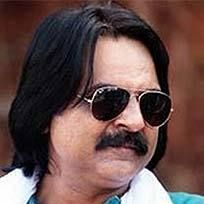


Ghamasaan
A cat-and-mouse tale set in the Hindi heartland, where male friendships and rivalries unveil homoerotic tensions. Men on both sides of the law traverse arid lands, creating a sense of place where unexplored histories reside. Set in the ravines of central India, Ghamasaan tells the story of an uncompromising IPS officer, played by Pratik Gandhi, who is tasked with bringing order to a land torn between politics, law, and outlaw rule. His mission brings him into direct conflict with a charismatic and feared dacoit leader, portrayed by Arshad Warsi, whose authority among the marginalized blurs the lines between rebellion and crime. As the officer digs deeper, he finds himself entangled in the complex nexus of caste, politics, and survival that fuels the region's unrest. The battle between law and outlaw is not painted in black and white-both men carry conviction, both embody a kind of justice, and both are trapped in the inevitability of violence. What begins as a manhunt unfolds into a meditation on power, morality, and the human cost of conflict. The film culminates in a dust-choked confrontation where the ravines themselves seem to swallow ideals, leaving behind only the stark question of whether justice can ever truly prevail in such a fractured world. Tigmanshu Dhulia's Ghamasaan is a taut, immersive exploration of power, morality, and survival set against the rugged ravines of central India. At its core is the electrifying duel between an uncompromising IPS officer (Pratik Gandhi) and a charismatic, unpredictable dacoit leader (Arshad Warsi). Dhulia's direction is meticulous and controlled-he balances intense, high-stakes action with quiet, contemplative moments that reveal the ethical and political complexities of the story. Gandhi embodies steadfast resolve and moral tension, while Warsi brings layered menace and charisma, and the supporting cast adds subtle texture, making every interaction feel consequential. Visually, the film is dominated by Dev Agarwal's cinematography, which transforms the landscape into a character in its own right. Wide, expansive frames render the ravines epic yet oppressive, while interiors are sculpted with light and shadow to reflect the weight of each decision. The colour palette evolves with the narrative, moving from earthy realism to fiery ambers and reds, before culminating in dust-choked desaturation that mirrors the inevitability of conflict. Agarwal's deliberate camera movement-tracking long takes, lingering on silent confrontations-heightens tension and immerses the audience in both the immediacy and allegorical resonance of the story. The result is a film where direction, performance, and cinematography converge to create a cinematic experience that is as intellectually compelling as it is visually breathtaking-a modern dacoit saga that lingers long after the credits roll.
Read more →

